
Talklang
Acoustic signatures of the Safiental: 15 places, and a whole valley, in the Swiss Alps, measured and kept as an archive you can step into by ear.
A collection of culturally important and acoustically striking spaces, made available as a digital archive for the world and for those who come after.
Talklang, “valley sound”, brings the Acoustic Signatures method to the Safiental in the Swiss canton of Graubünden. It began with an EAE research residency at the Alpenblick Berghotel in Tenna, together with the director, performer and writer Sarah Bahr. The project makes a collection of the valley’s culturally important and acoustically interesting spaces available as an interactive digital archive.
Acoustic Signatures makes us aware of space as something we take part in. It brings history into the present and changes, for good, how we relate to the world. When we perceive a room’s acoustics consciously, space and architecture become an aesthetic and sensory experience. Talklang follows the trail of these sound spaces and offers a new way of looking at them, by listening.
The project
Measure
Data profiles of 15 sonically striking spaces in the Safiental, measured and analysed acoustically through impulse responses.
Archive
From that list, an interactive website through which anyone can place themselves, audio-virtually, inside each of the spaces.
Share
Workshops in which the idea of acoustic signatures is explained, discussed and tested.
Fifteen places
An open list of acoustic signatures gathered from 15 emblematic, historic places in the valley:
- Reformed Church, Valendas
- Jooshaus, Valendas
- Protestant Church, Versam
- Old tunnel, Versam
- Reformed Church, Tenna
- Hotel Alpenblick, Tenna: bar, veranda and dining room
- Reformed Church, Neukirch
- Reformed Church, Safien Platz
- Tunnel of the Zervreila power station, Safien
- Turbine hall of the Zervreila power station, Safien
- Aalt Huus, the Safien local museum
- Kleinhotel Nühuus: Stübli and fireplace room
- Old beehouse at the Kleinhotel Nühuus
- Protestant Reformed Church, Thalkirch
- Turra exhibition barn
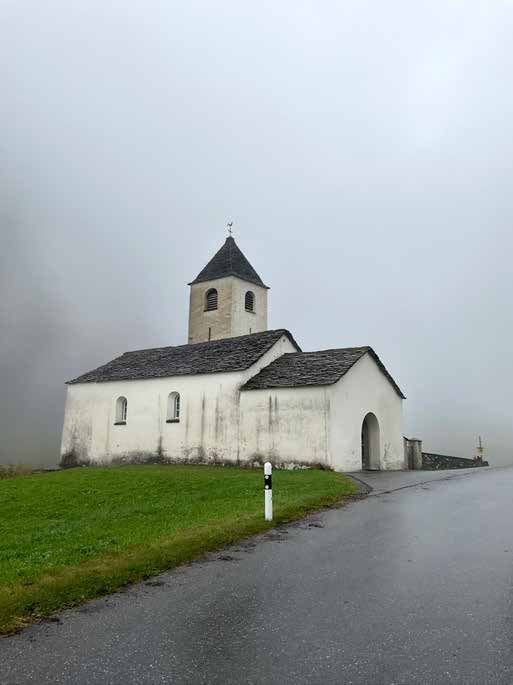
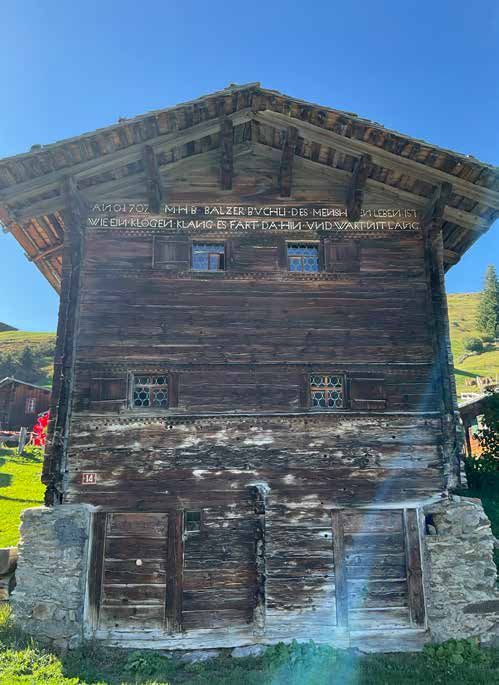
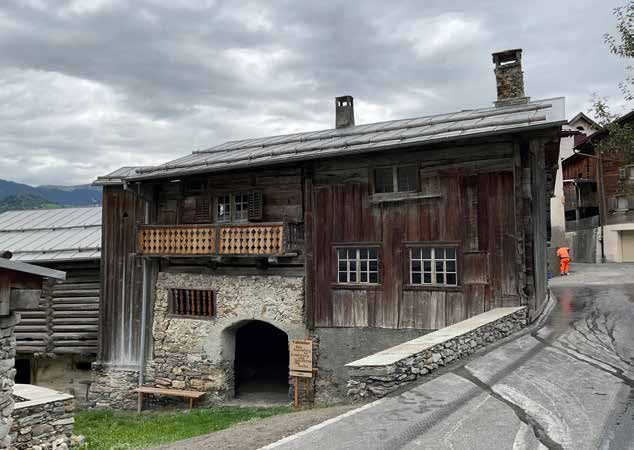
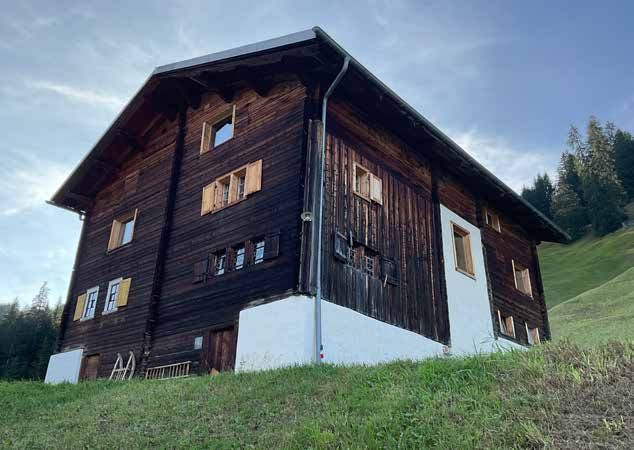
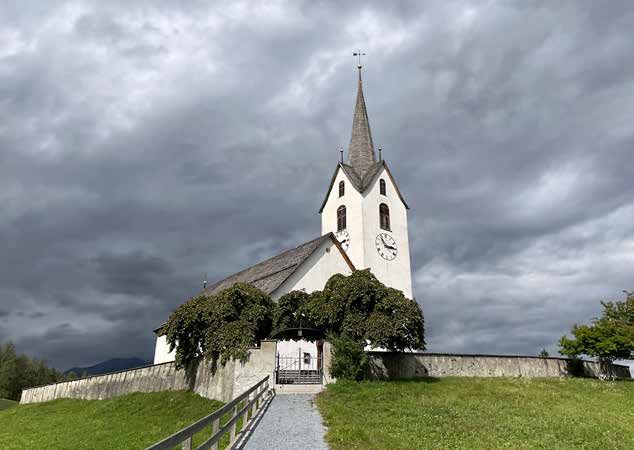
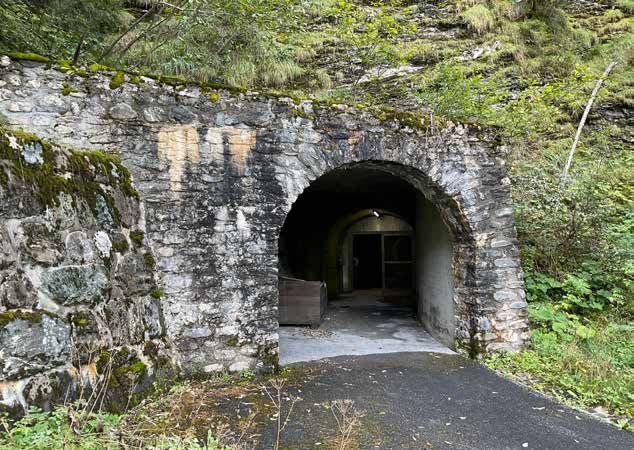
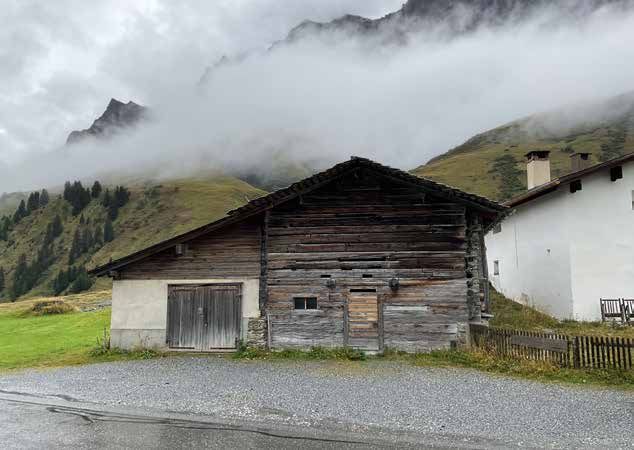
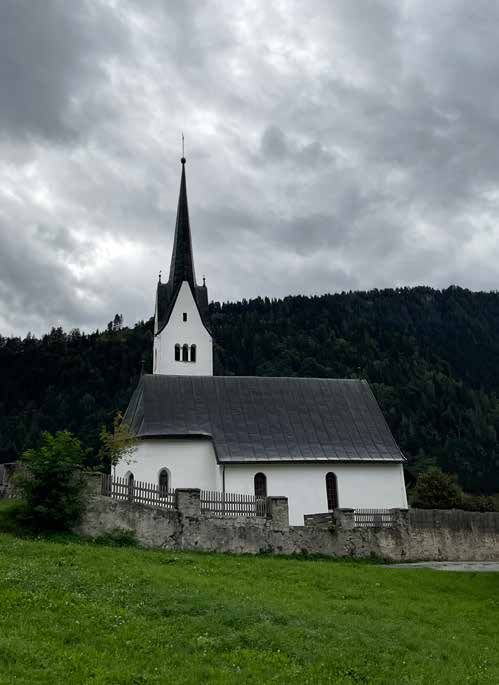
Some of the 15 places.
Listening to a whole valley
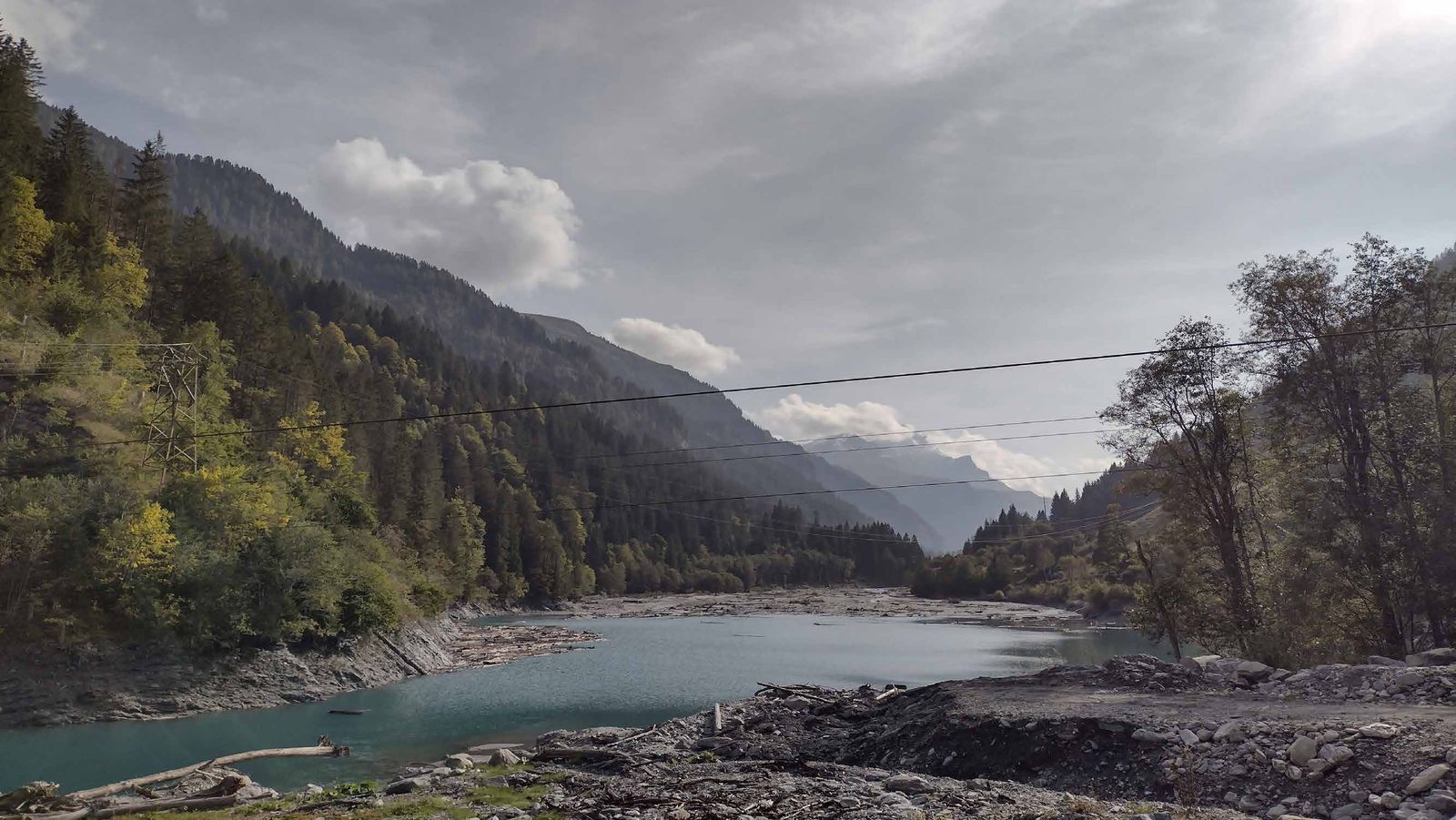
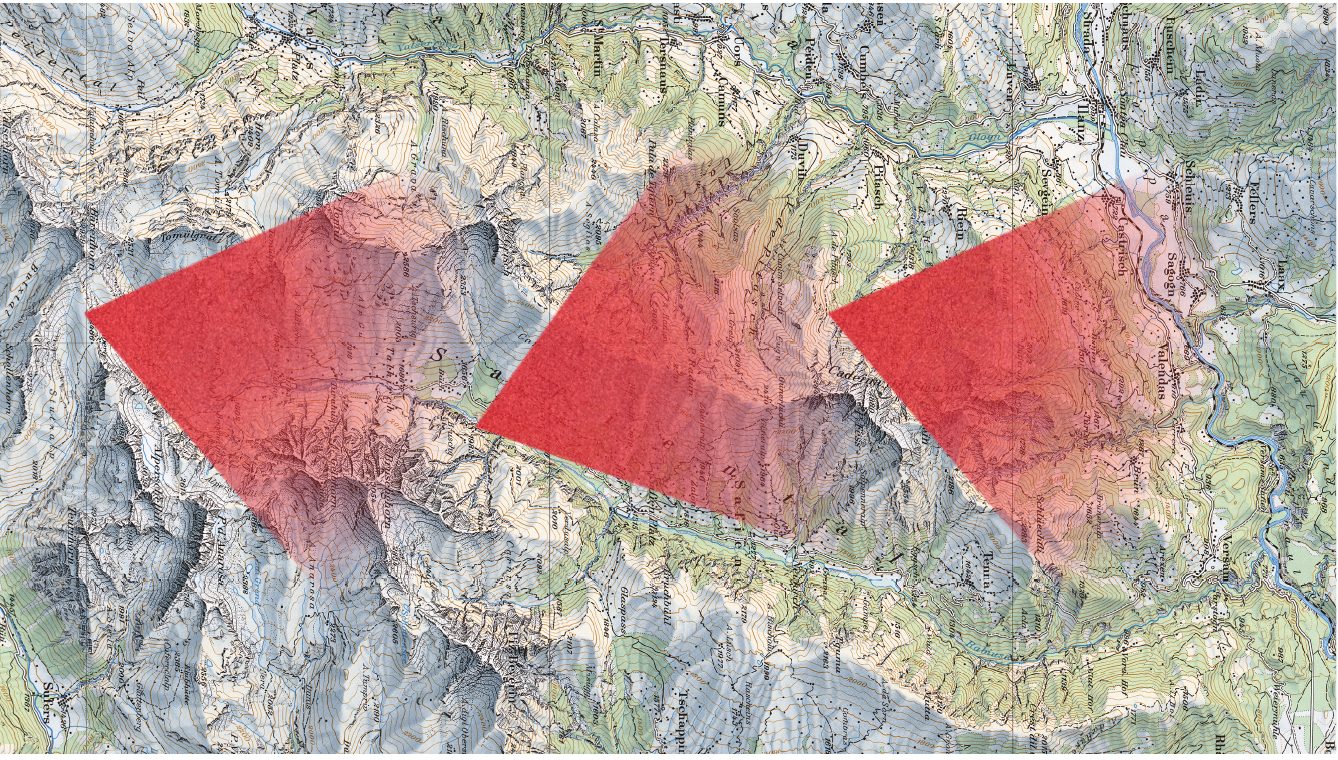
During the residency we also gathered the reflections and time delays of sound in the valley itself. Using topographical data from swisstopo, we could convolve the valley in the computer: model how the landscape as a whole answers a sound. The valley’s own reverberation then becomes material to work with musically, for example with the acoustic effect of beating, turning the valley into a natural amplifier that needs no current.
Why resonance matters
When people talk about famous concert halls, such as the KKL in Lucerne or the Musikvereinssaal in Vienna, it is often because of the unmistakable sound of those rooms. Resonance and reverberation are essential features of every place, and they make the geometry of a space something the senses can grasp. Each space has its own acoustic character: energy is spread unevenly, so certain resonant frequencies are emphasised and others less so. A room’s acoustic profile comes from its dimensions, its design, its materials and the climate it stands in. What we call a room’s natural frequency is set by its architecture, through the standing waves that form between parallel surfaces. That is why grottoes and valleys are acoustically more distinctive than flat landscapes or open fields.
The pragmatic starting point of the project is the measurement of each room’s particular reverberation, but there is much more to it. Acoustics is an invisible, and so often overlooked, part of our relationship with the world. Through physical vibration we are in direct contact with our material surroundings. Resonance carries information that we use every day without thinking, for orientation, among other things. But when we experience resonance consciously, we can connect closely with our surroundings. Resonance is the direct physical result of a vibration: something that moves, and that moves us. We can understand it as sensory evidence that the elements of a system interact and influence each other. Sound carries a story, and our hearing helps us navigate it.
Acoustic Signatures is a new approach in the field of conservation, and an unusual contribution to the study and preservation of historic buildings and natural monuments. With it we want this link between people and their surroundings to be read and understood anew by future generations, and to sharpen awareness of how directly connected we are.
Method
We call the combination of the experience of a space and its specific reverberation an acoustic signature, and the method for capturing it is unobtrusive. We go beyond a simple sound recording: from a sonic snapshot, using software and hardware developed for the purpose, we extract acoustic data that holds a sensory experience.
To measure a space, it is excited acoustically, with a sine sweep or a simple bang, and the test signal is recorded with a microphone. We use Kaan (Hindi for “ear”), a binaural microphone sound.codes developed for exactly this, alongside an AB stereo pair. Indoors, the recorded signal holds the totality of the room’s resonances, its impulse response. Through mathematical convolution, that response becomes a profile of the room that any sound can be placed into.
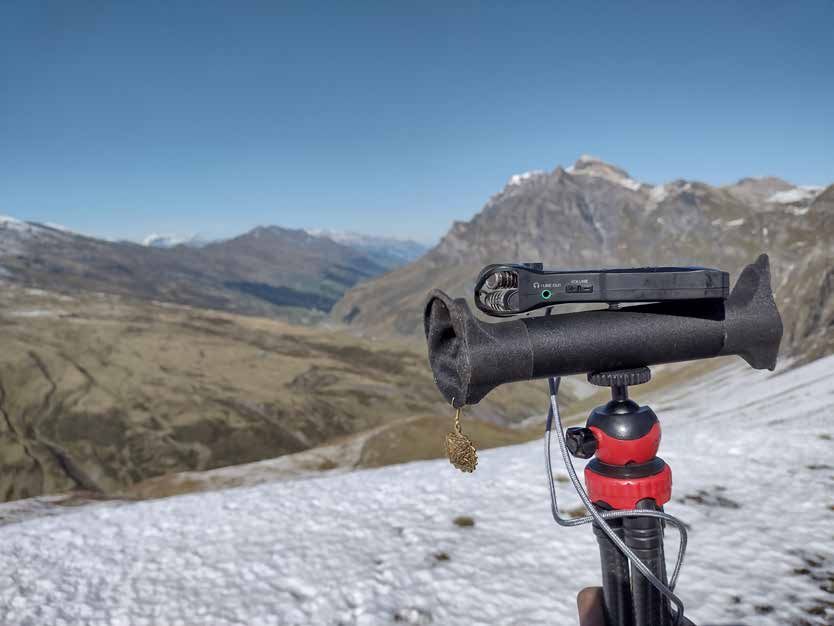
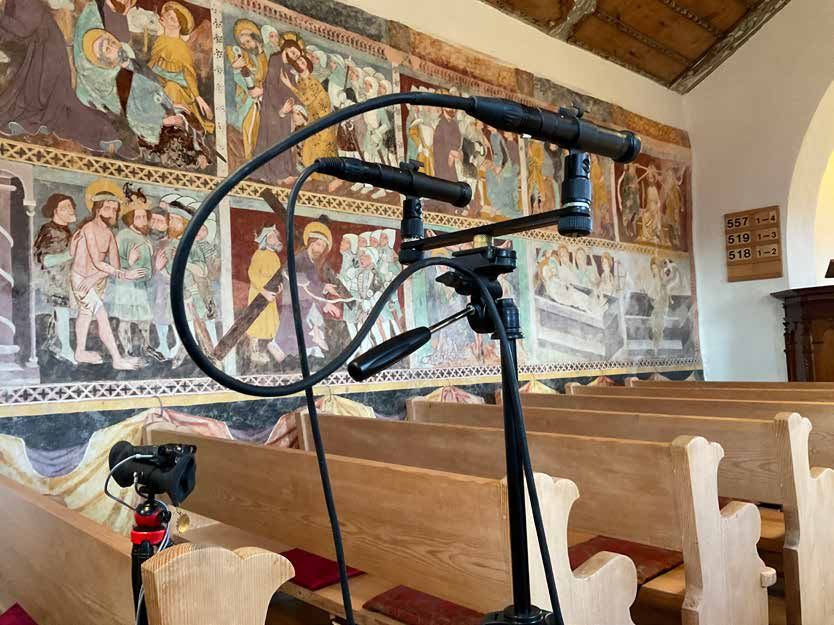
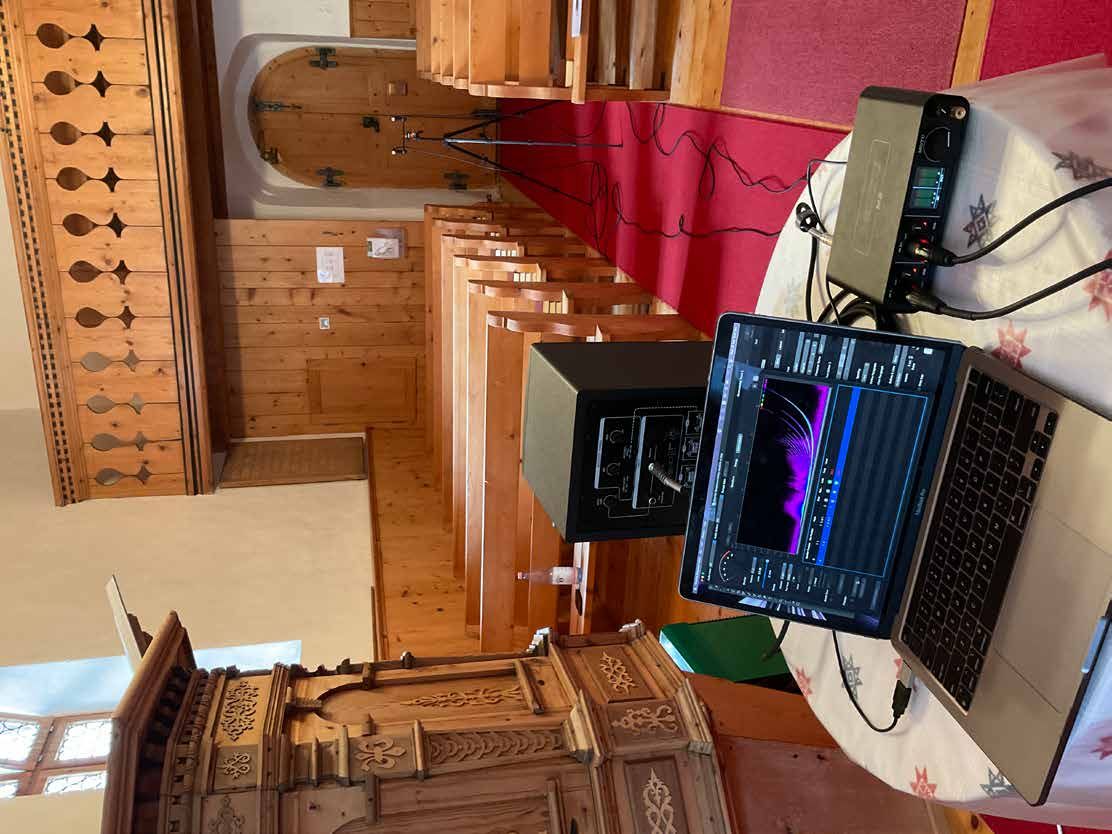
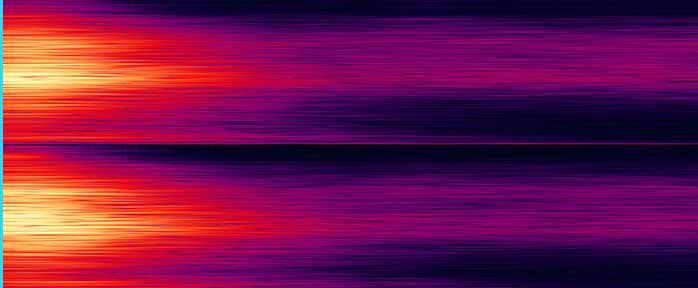
Recording with Kaan; a double setup with AB stereo; measuring in a church; the spectrogram of a bang.
Have a space, a sound or an idea?
We design custom immersive experiences and tools for artists and businesses, and we’re always looking for spaces to listen to.
contact@sound.codes