
Archaeoacoustics
Archaeoacoustics studies how sound behaved in the places of the past, and what that tells us about the people who built and used them. Our part of it is conservation: recording how India’s heritage spaces sound, so that their acoustic imprint outlives restoration, ruin and change.
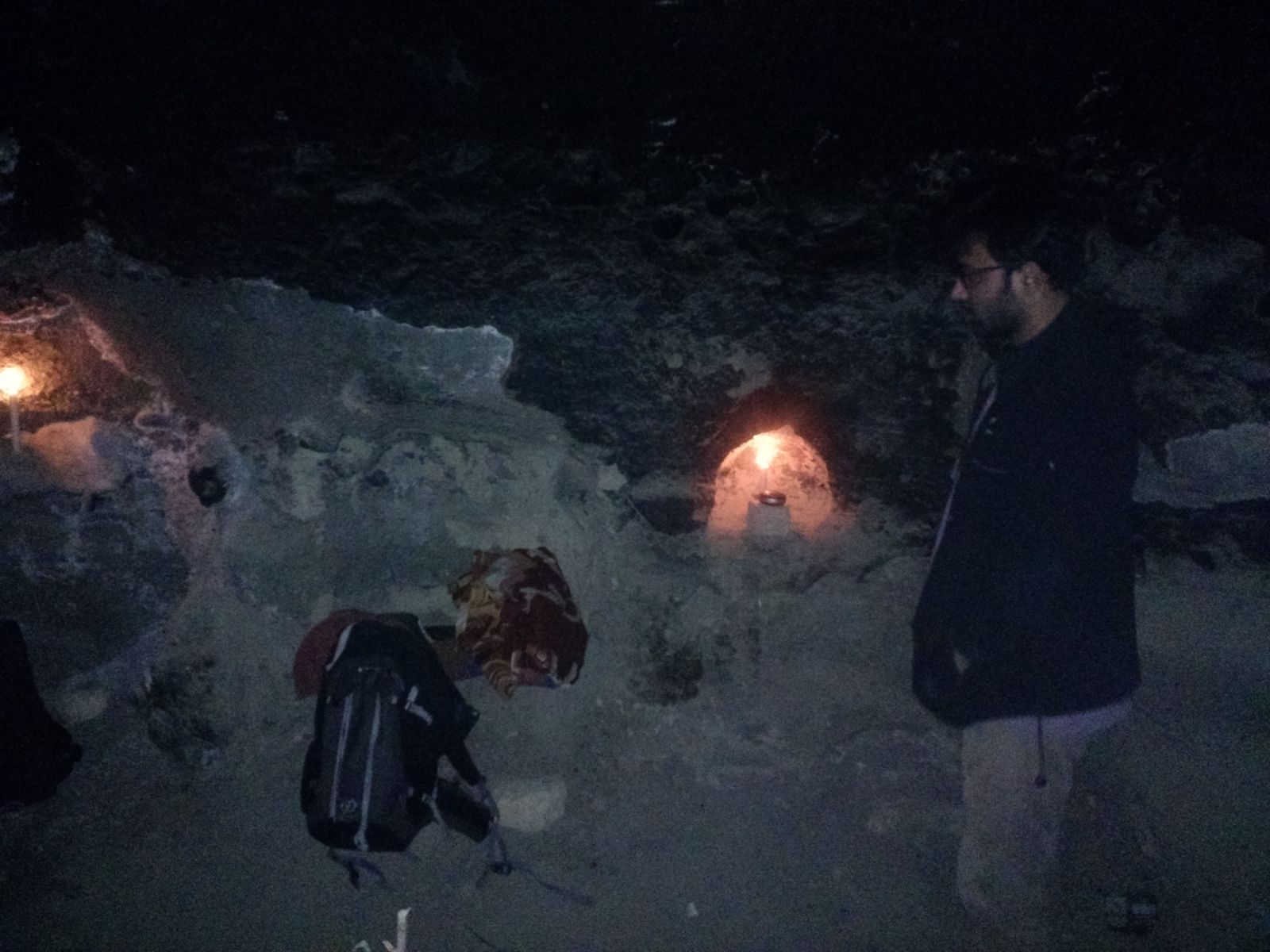
“For oral cultures, the cosmos is an ongoing event with man at its centre. Man is the umbilicus mundi, the navel of the world.”
Walter Ong12
Sound as a medium of historical conservation.
It’s thought-provoking that in the contemporary world, the loss of a sense of centre is attributed to the disappearance of the integrity of the audible world.
Over centuries, time has enriched our experience of space until it became part of our heritage; all our senses fuse into a memorable image of a place, and acoustic experience reinforces that image. It’s a back door where the past presents itself not as historical data or art, but as experience.
All enduring historical spaces recorded in other media will lose context and content over time. At the outer edges of that loss is acoustic data. We conserve heritage spaces through their acoustic signatures and recreate their aural experience, in the real world and online.
Why conserve how a place sounds
A building’s acoustics are part of what it was made for. In the painted caves of the Pyrenees, Iegor Reznikoff and Michel Dauvois found images clustered where the caves resonate most strongly.1 Thirty years later, Bruno Fazenda and colleagues measured painted caves in northern Spain and found that lines and dots are statistically more likely where reverberation is moderate and low frequencies resonate: in their words, a weak but tenable link.2
India is full of spaces built to be heard. The granite pillars of the Vitthala temple at Hampi ring as tuned notes when struck, and measurements in 2008 matched each pillar’s pitch to the bending vibration predicted from its dimensions.3 Under the dome of Gol Gumbaz in Bijapur, a whisper carries around the gallery.4 Temples, mosques, churches and forts were designed for chant, prayer, music and command, and each answers sound in its own way.
Acoustics are also fragile. A new floor, carpets, glazing, a sound system, a collapsed roof or careful restoration can change how a space sounds, often without anyone noticing. When Notre-Dame de Paris burned in 2019, the only detailed record of its sound was a set of impulse responses Brian Katz’s team had measured in 2013; those measurements now calibrate the models used to guide its restoration.5 Most spaces have no such record.
UNESCO protects intangible heritage: practices, performance and knowledge.6 The sound of a space sits between the tangible and the intangible. It belongs to the building, yet exists only when someone makes a sound in it and someone else hears it. That is what we record.
How we capture a signature
How sound propagates in a space is its impulse response. We call it an acoustic signature.
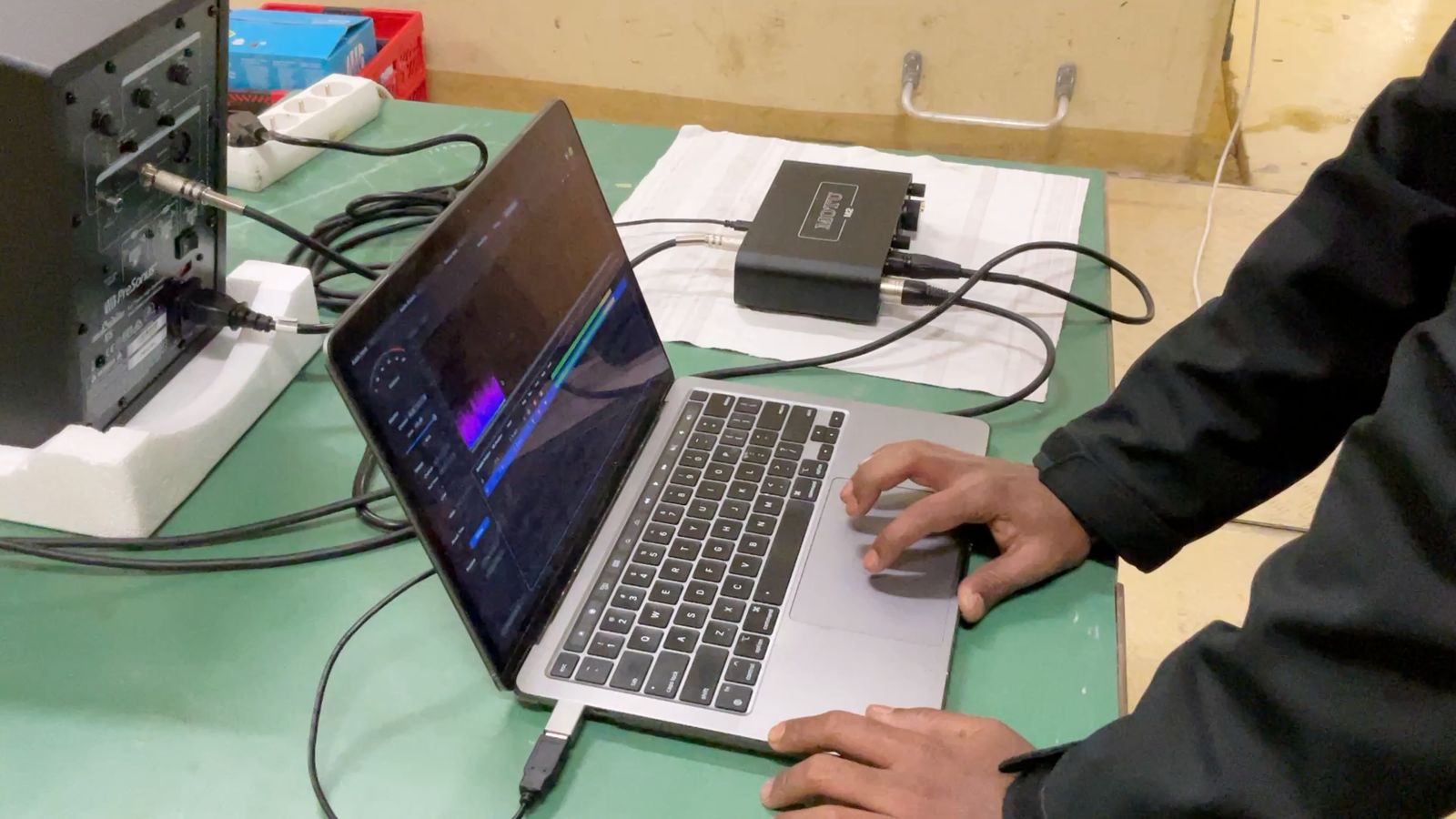
Excite the space
A sine sweep played through a loudspeaker, or an impulse such as a balloon pop where there is no power, sets the room ringing.
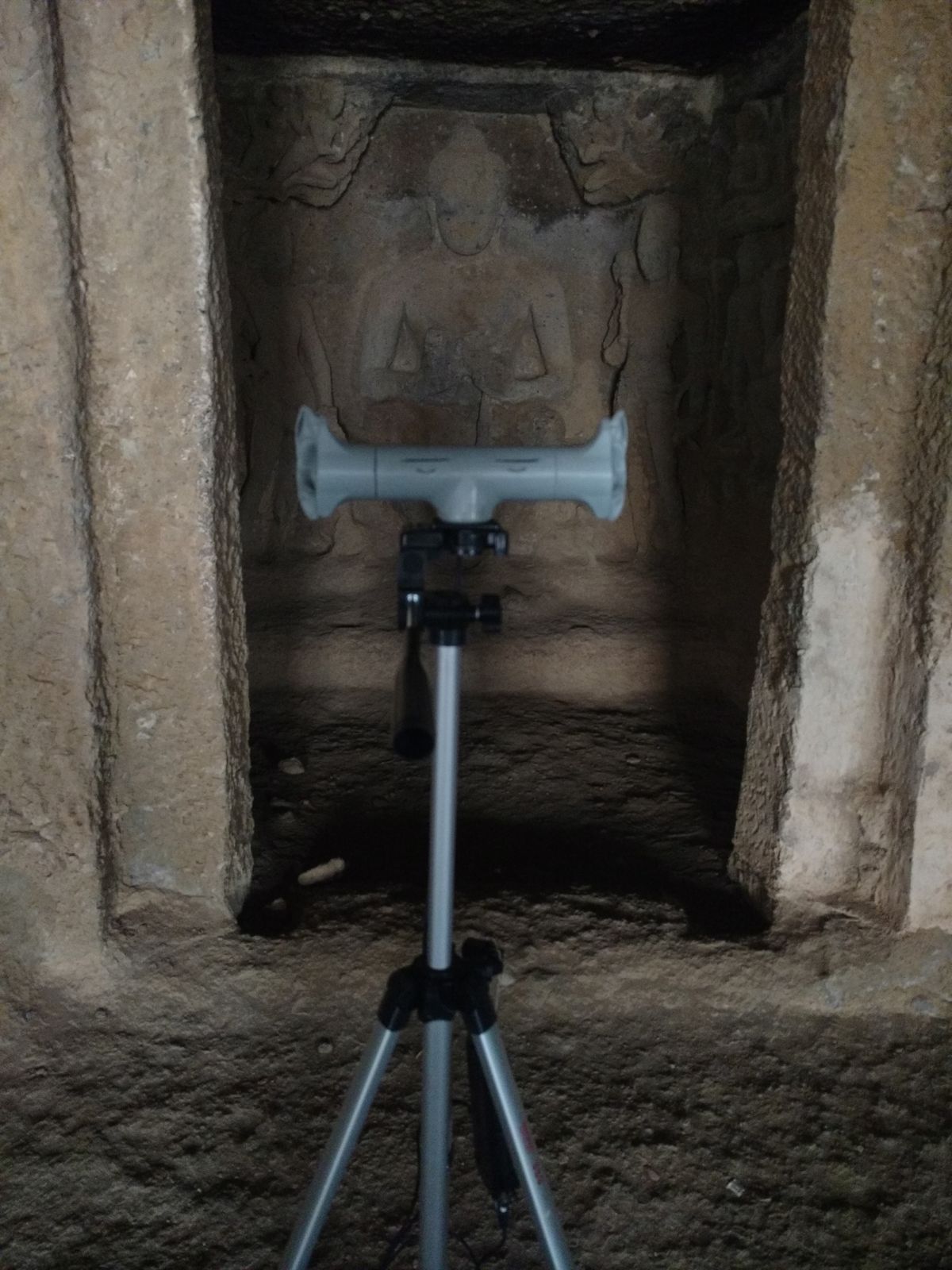
Listen like a person
Kaan, our binaural microphone averaged from more than 800 human ear shapes, records the room as it answers.
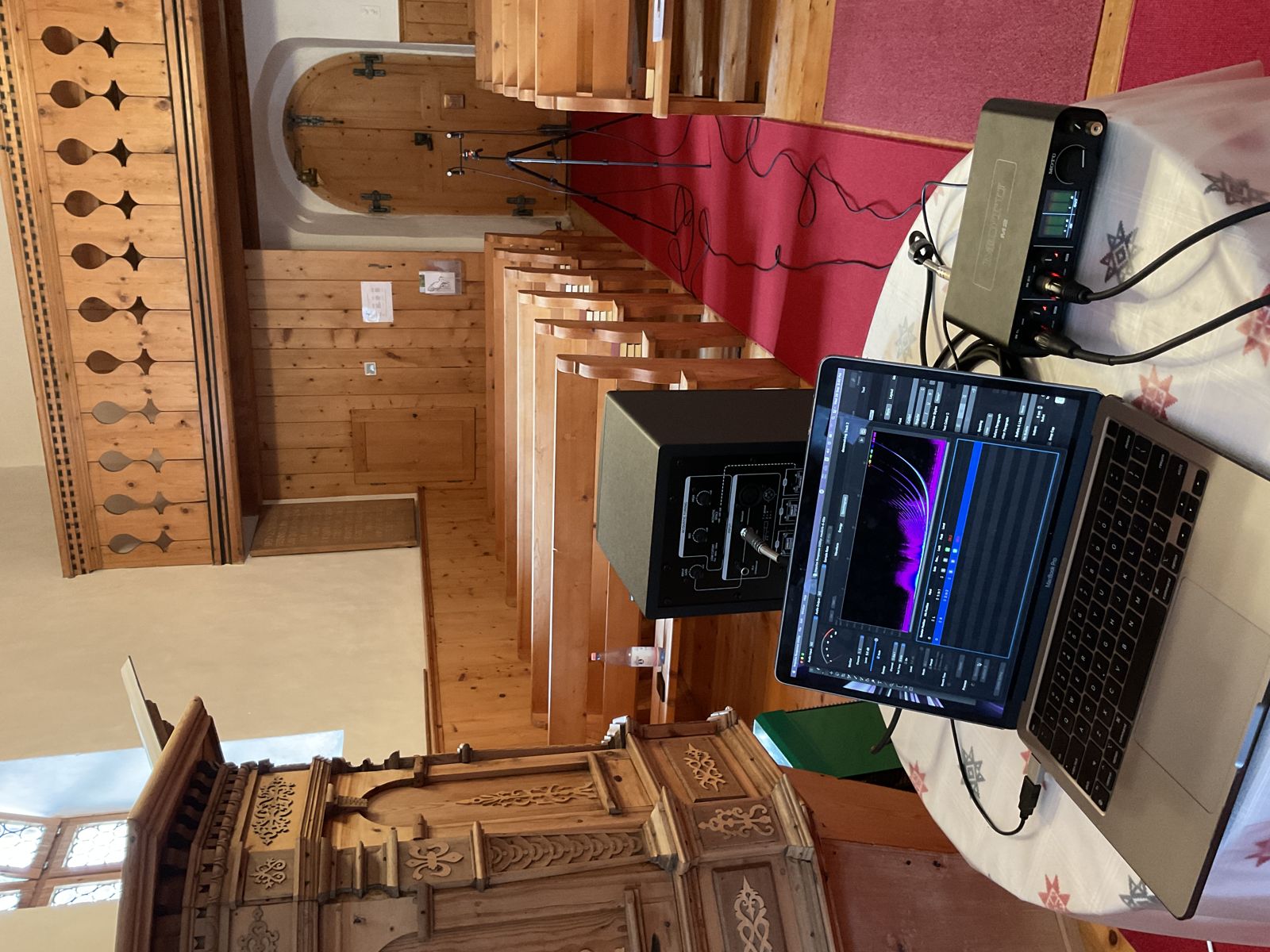
Archive the response
Convolution extracts the room’s response and stores it as an acoustic signature, ready for musicians, sound designers, researchers, games, VR and cinema.
The method draws on the standard practice for measuring rooms, ISO 3382-1,7 and on Angelo Farina’s swept-sine technique, which separates a room’s response from the distortion of the loudspeaker.8 From each response we can read the reverberation time and other room parameters, and we keep the response itself, because the numbers alone can’t be listened to.
What a signature is for
Once a space is captured, it can be heard anywhere.
Auralisation
Play any dry sound through a signature with convolution and hear it as if it were in the space: a voice in a cave, a raga in a church.9
The convolution talkComparison
Reverberation times set side by side show how materials, size and shape change sound, from a 0.36 s cave to a 14.74 s water tank.
How long each space ringsA baseline for change
A signature recorded today is a reference for any restoration or reuse tomorrow, so that changes to how a space sounds can be measured and, if needed, undone.
Acoustic Signatures ProjectCreative work
Musicians, sound designers, games, VR and cinema can place sound in real heritage spaces. You can play the 8knobs drones through our Goa and Mumbai spaces right here.
Ask about a signature
An auralisation is a snapshot
Every auralisation is one static picture of how a place sounds, shaped by the limits of the recording system as much as by the space. A model of a heritage site is only as good as the research documenting its history, and we hear it through our own contemporary ears. That is why we record the spaces themselves, as they stand today.
Our archaeoacoustic work
All archives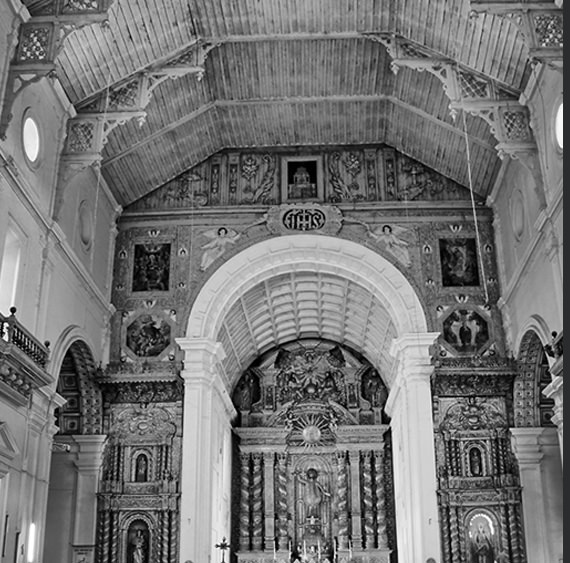
Goa
23 spaces from Buddhist caves to Portuguese forts, recorded in 2017.
Archive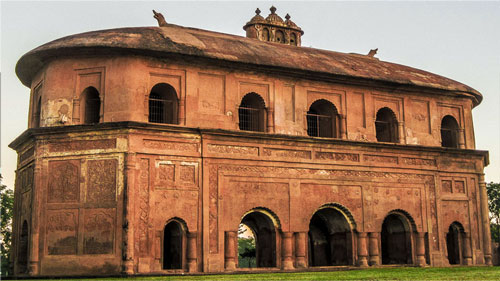
Ahom kingdom, Assam
Rang Ghar, Talatal Ghar and the temples of Sibsagar, recorded in 2014.
Archive
Victorian Bombay
Theatres that became cinema halls, and a hall that became a museum.
Archive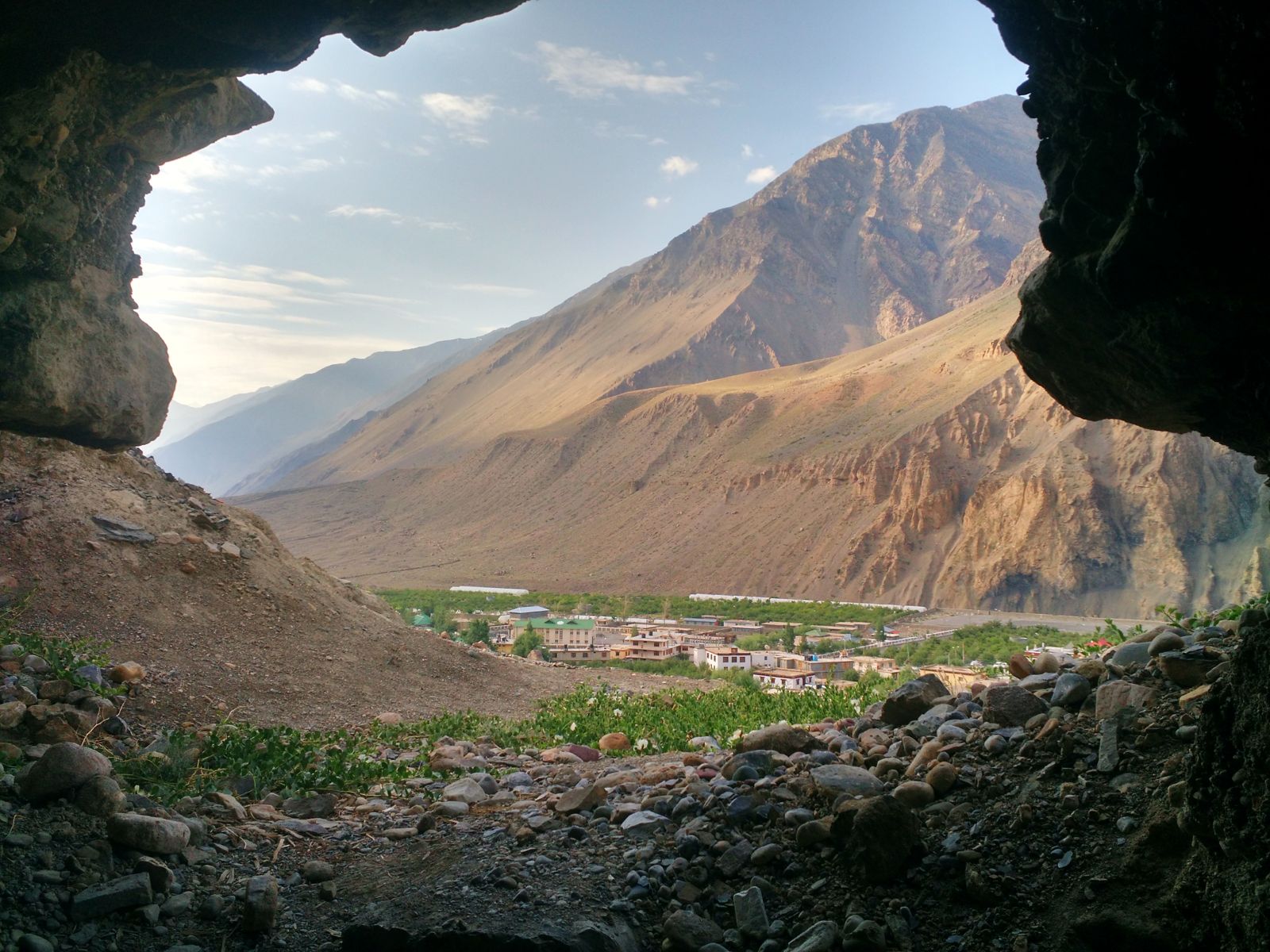
Tabo caves, Spiti
Eroded hermit caves where every chamber has its own resonance.
Archive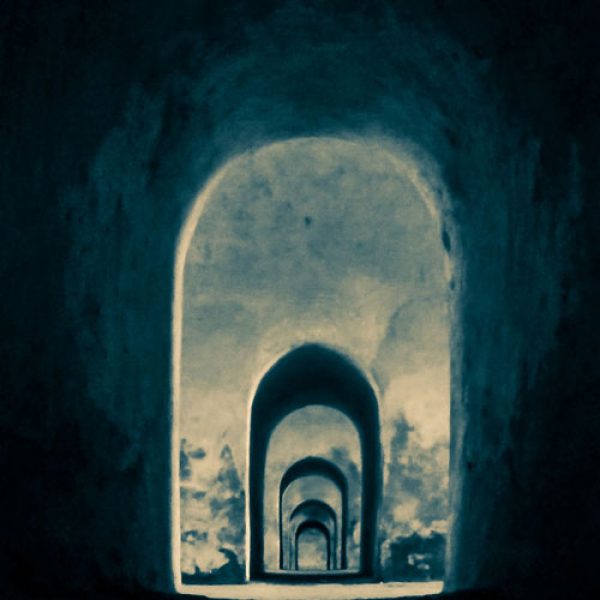
Aural Sculptures
The sounds of the Ahom kingdom, rebuilt in a dark room.
Installations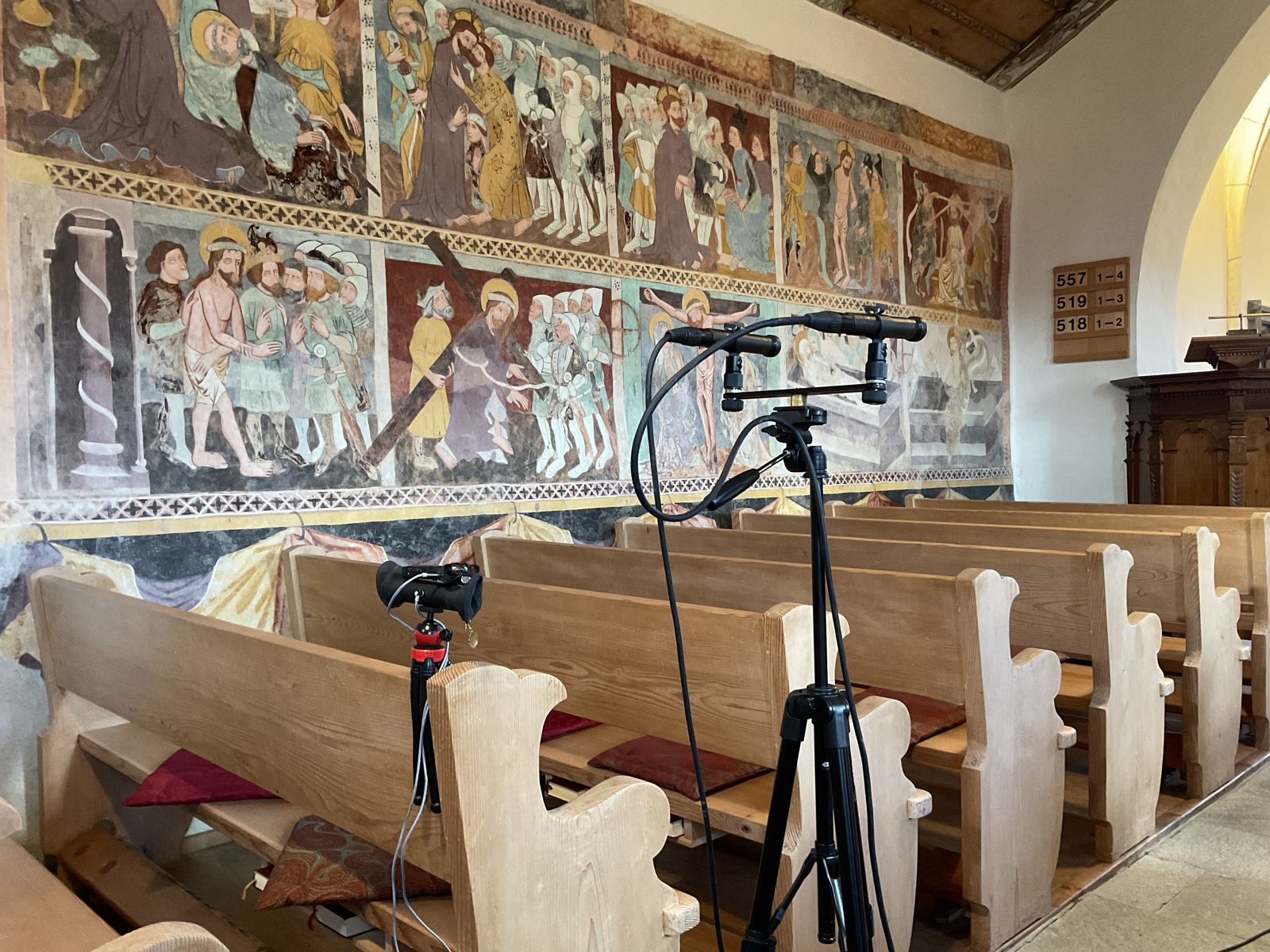
Using convolution for archaeoacoustic conservation
A talk in three parts, yesterday, today and tomorrow, on hearing the past through convolution.
Education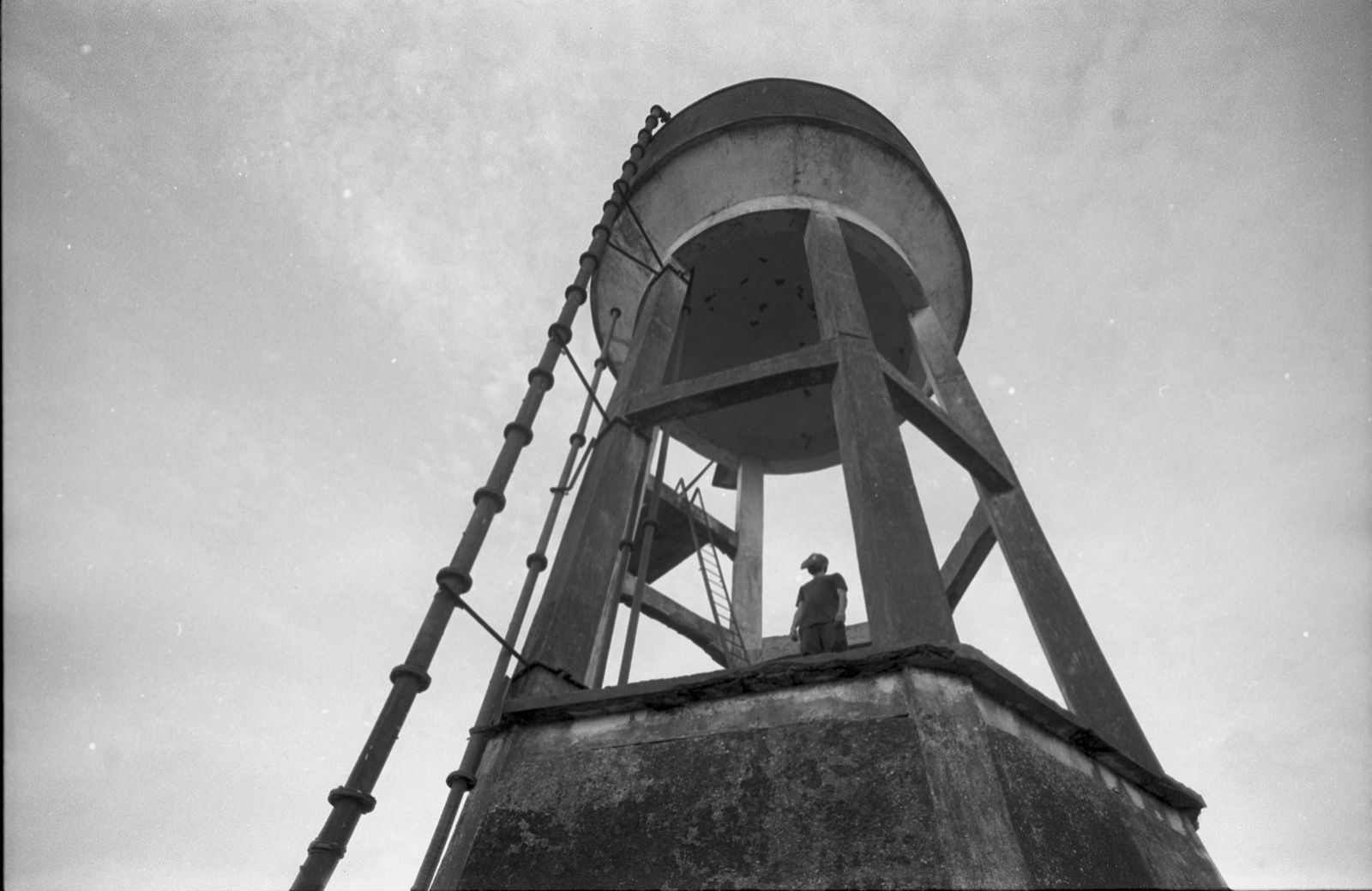
Listening to Architecture
A workshop on how buildings shape sound, and how to record a room’s acoustic signature.
Education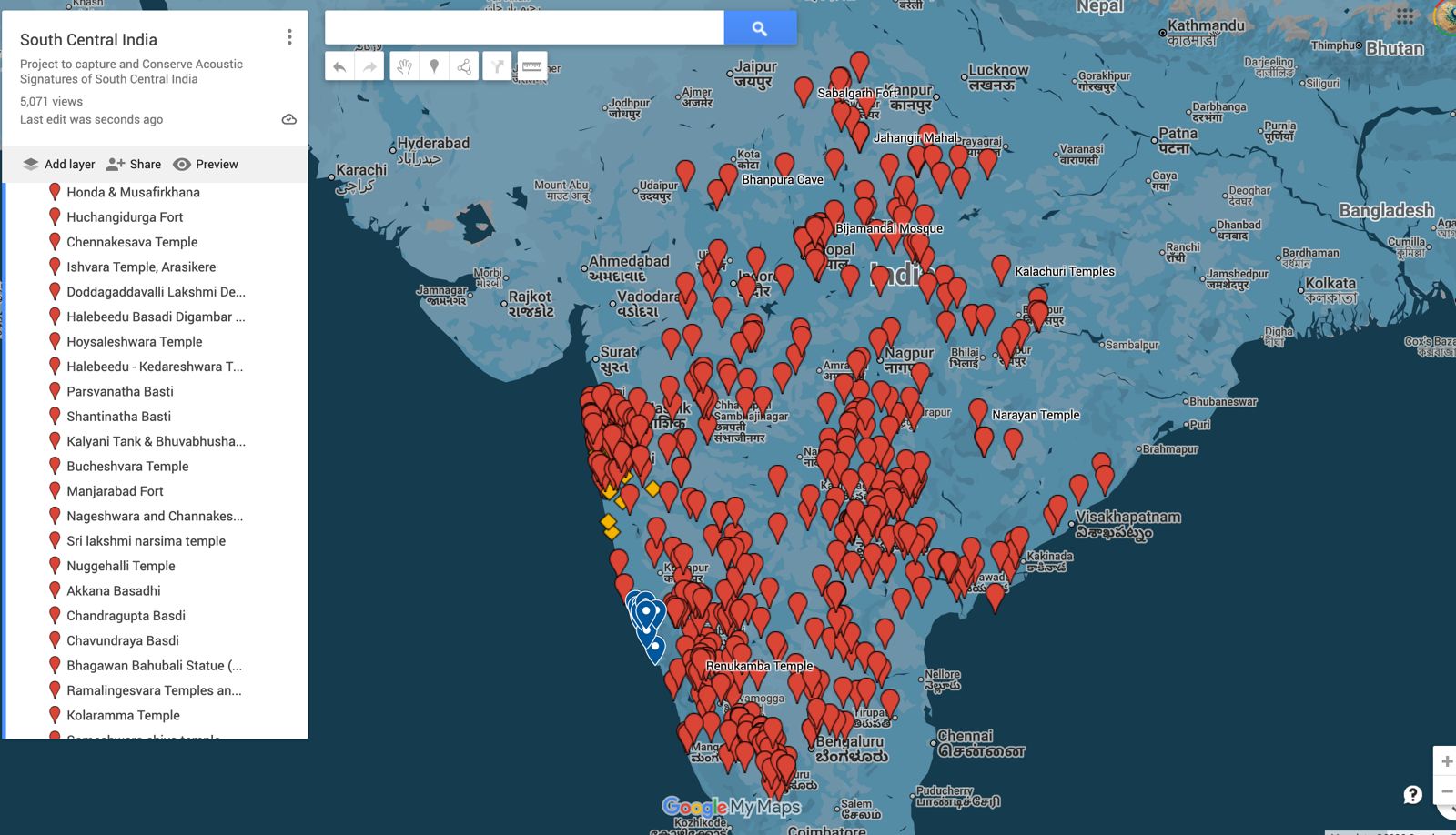
Acoustic Signatures Project
Since 2016: a comparative study of spaces across India, now focused on South-Central India.
OngoingTalks on acoustic conservation
References
- Reznikoff, I. & Dauvois, M. (1988). La dimension sonore des grottes ornées. Bulletin de la Société préhistorique française 85(8), 238–246. Link
- Fazenda, B., Scarre, C., Till, R. et al. (2017). Cave acoustics in prehistory: exploring the association of Palaeolithic visual motifs and acoustic response. Journal of the Acoustical Society of America 142(3), 1332–1349. Link
- Kumar, A., Jayakumar, T., Rao, B. C. et al. (2008). Nondestructive characterization of musical pillars of Mahamandapam of Vitthala Temple at Hampi, India. Journal of the Acoustical Society of America 124(2), 911. Link
- Gol Gumbaz, Bijapur: whispering gallery. Sonic Wonders. Link
- Science News (2020). How to restore the legendary acoustics of Notre Dame. On Brian Katz’s 2013 impulse-response measurements and their use after the 2019 fire. Link
- UNESCO (2003). Convention for the Safeguarding of the Intangible Cultural Heritage. Paris. Link
- ISO 3382-1:2009. Acoustics: measurement of room acoustic parameters. Part 1: Performance spaces.
- Farina, A. (2000). Simultaneous measurement of impulse response and distortion with a swept-sine technique. 108th AES Convention, Paris, preprint 5093.
- Murphy, D., Shelley, S., Foteinou, A., Brereton, J. & Daffern, H. (2017). Acoustic heritage and audio creativity: the creative application of sound in the representation, understanding and experience of past environments. Internet Archaeology 44. Link
- Scarre, C. & Lawson, G. (eds.) (2006). Archaeoacoustics. McDonald Institute for Archaeological Research, Cambridge.
- Blesser, B. & Salter, L.-R. (2007). Spaces Speak, Are You Listening? Experiencing Aural Architecture. MIT Press.
- Ong, W. J. (1982). Orality and Literacy: The Technologizing of the Word. Methuen.
Have a space that should be heard?
We record heritage spaces, run listening workshops and help with convolution reverbs, installations and research. Tell us about the place.
contact@sound.codes