
Listening to Architecture
A workshop on how buildings shape sound, and how to record a room’s acoustic signature.
Our sense of space is sound.
Close your eyes in a cathedral and in a cupboard and you will know which is which. In every space, sound propagates in a unique way, shaped by geometry and by the materials it meets. This workshop teaches people to hear that, and then to measure it.
Hearing space
We start with the body. Our two ears, the shape of the head and the folds of the outer ear tell the brain where a sound comes from and how big the room is. A single reflection is enough to give the brain information about the space around a source. Participants compare binaural, omnidirectional and directional (cardioid) microphones to hear how each one ‘listens’.
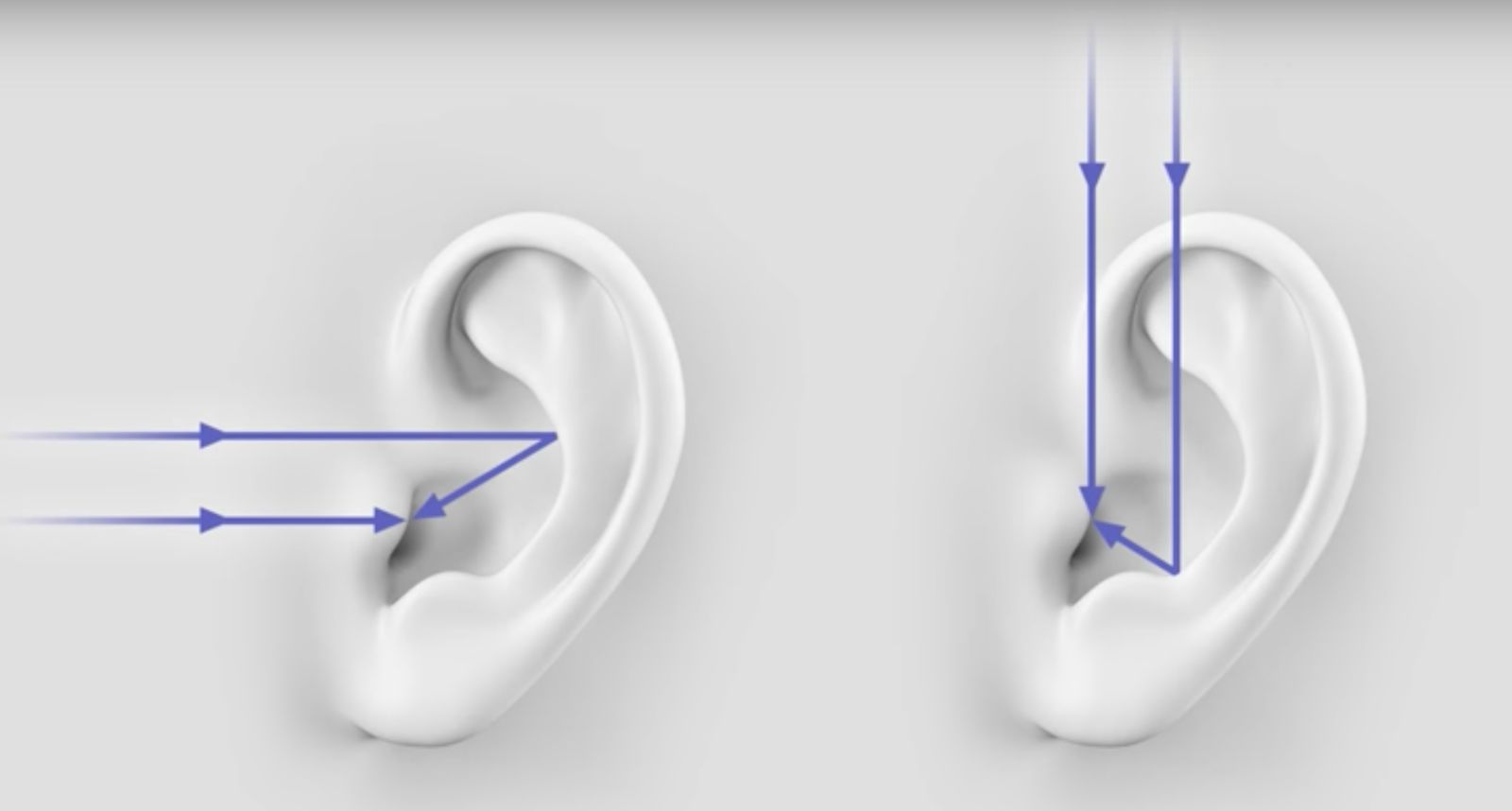
Two ways to capture a room
How sound interacts with an environment is called its impulse response. We call it an acoustic signature. The workshop demonstrates two ways to record one.
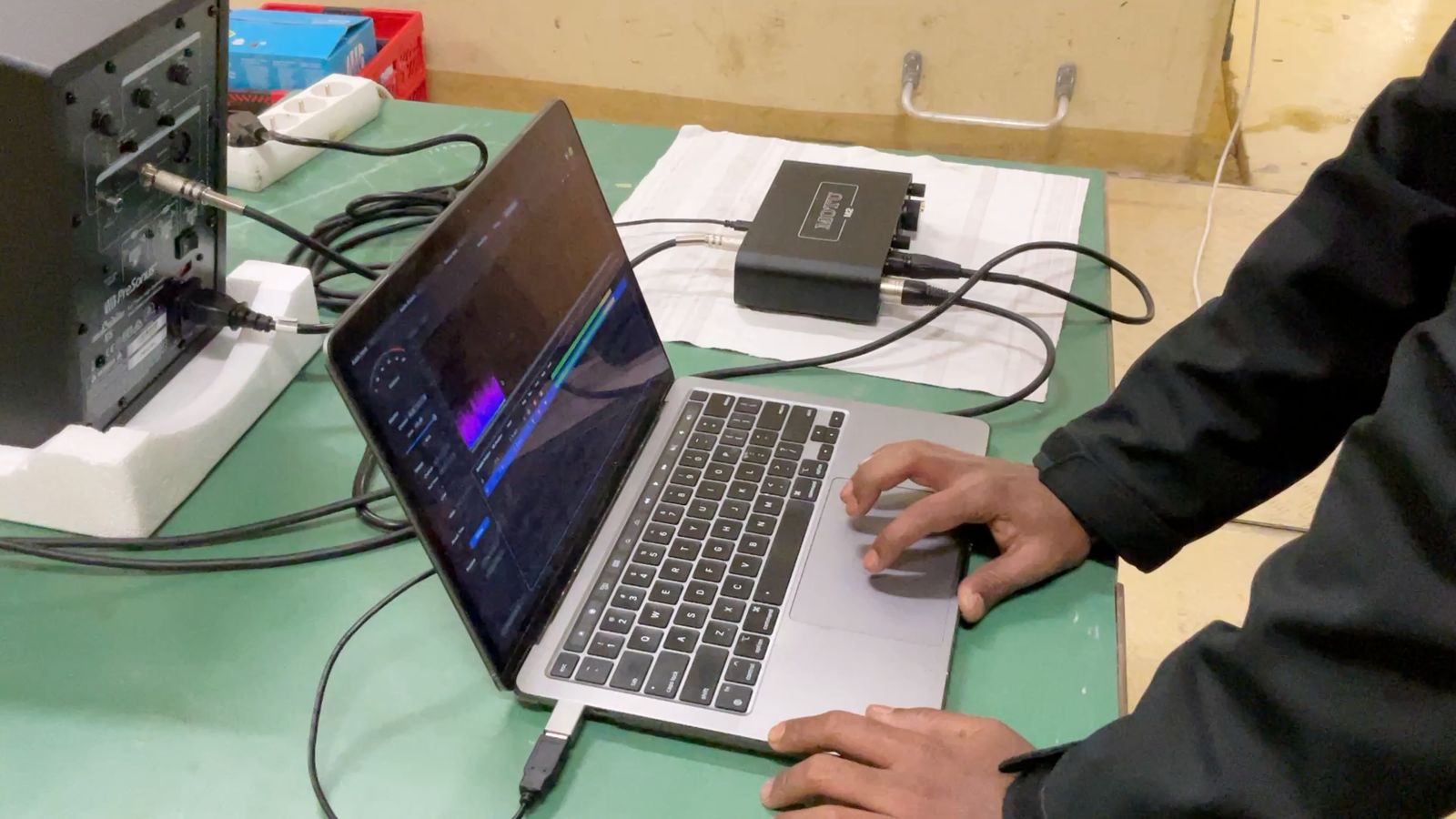
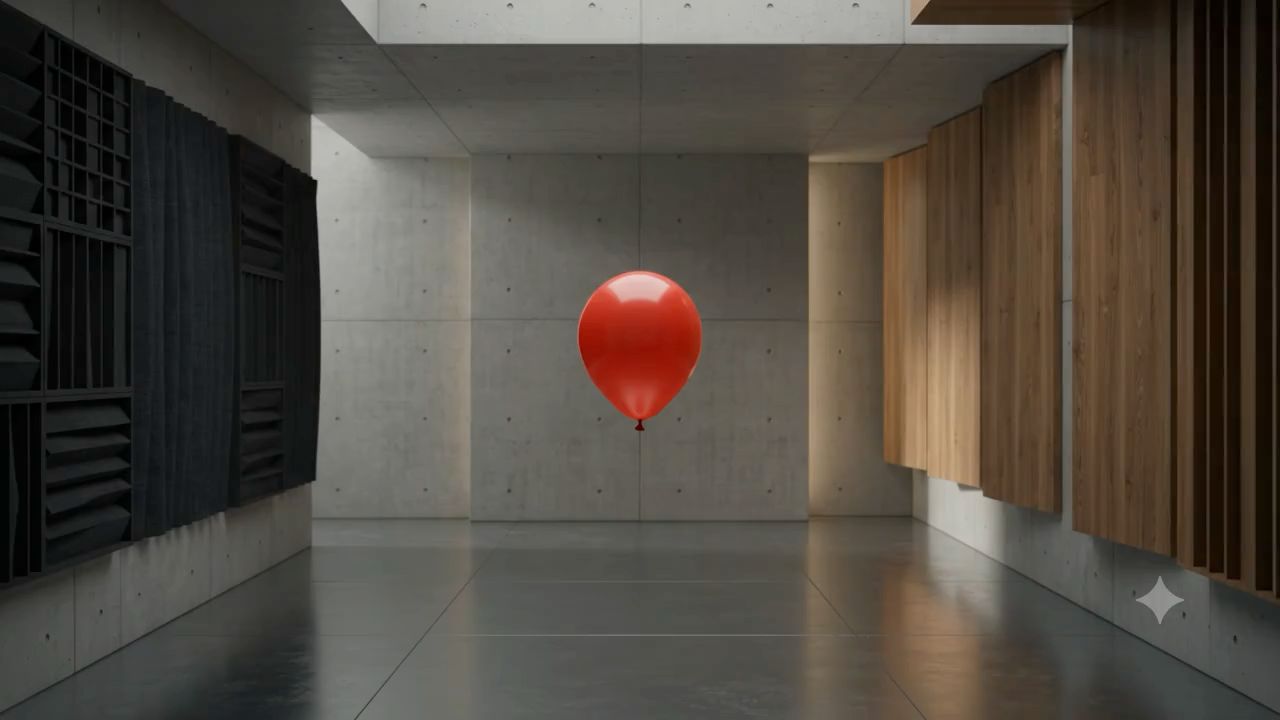
Method one plays a slow sine sweep through a loudspeaker and records it, then removes the sweep mathematically to leave only the room. It is precise and repeatable. Method two uses an impulsive sound, such as a balloon pop or a clap, and records the room ringing out. It is quick, portable and needs no power, which makes it useful in remote caves and temples.
A mathematical operation called convolution then lets you place any dry sound inside the recorded room. These datasets are used in virtual and augmented reality, video games, cinema and music.
From the archive
The session ends with listening: Talatal Ghar and Rang Ghar in Assam, the Gharapuri (Elephanta) caves in Maharashtra, and others from our archive, heard through the same voice so that only the room changes.
References
- Blesser, B. & Salter, L.-R. (2007). Spaces Speak, Are You Listening? Experiencing Aural Architecture. MIT Press.
- Farina, A. (2000). Simultaneous measurement of impulse response and distortion with a swept-sine technique. 108th AES Convention, Paris, preprint 5093.
- Blauert, J. (1997). Spatial Hearing: The Psychophysics of Human Sound Localization (rev. ed.). MIT Press.
- ISO 3382-1:2009. Acoustics: Measurement of room acoustic parameters. Part 1: Performance spaces.
Have a space, a sound or an idea?
We design custom immersive experiences and tools for artists and businesses, and we’re always looking for spaces to listen to.
contact@sound.codes