
Hardware
Our research in the field kept asking for tools that didn’t exist. These are the instruments we designed and built by hand to answer it: for listening closely, recording anywhere and making drones.

Kaan
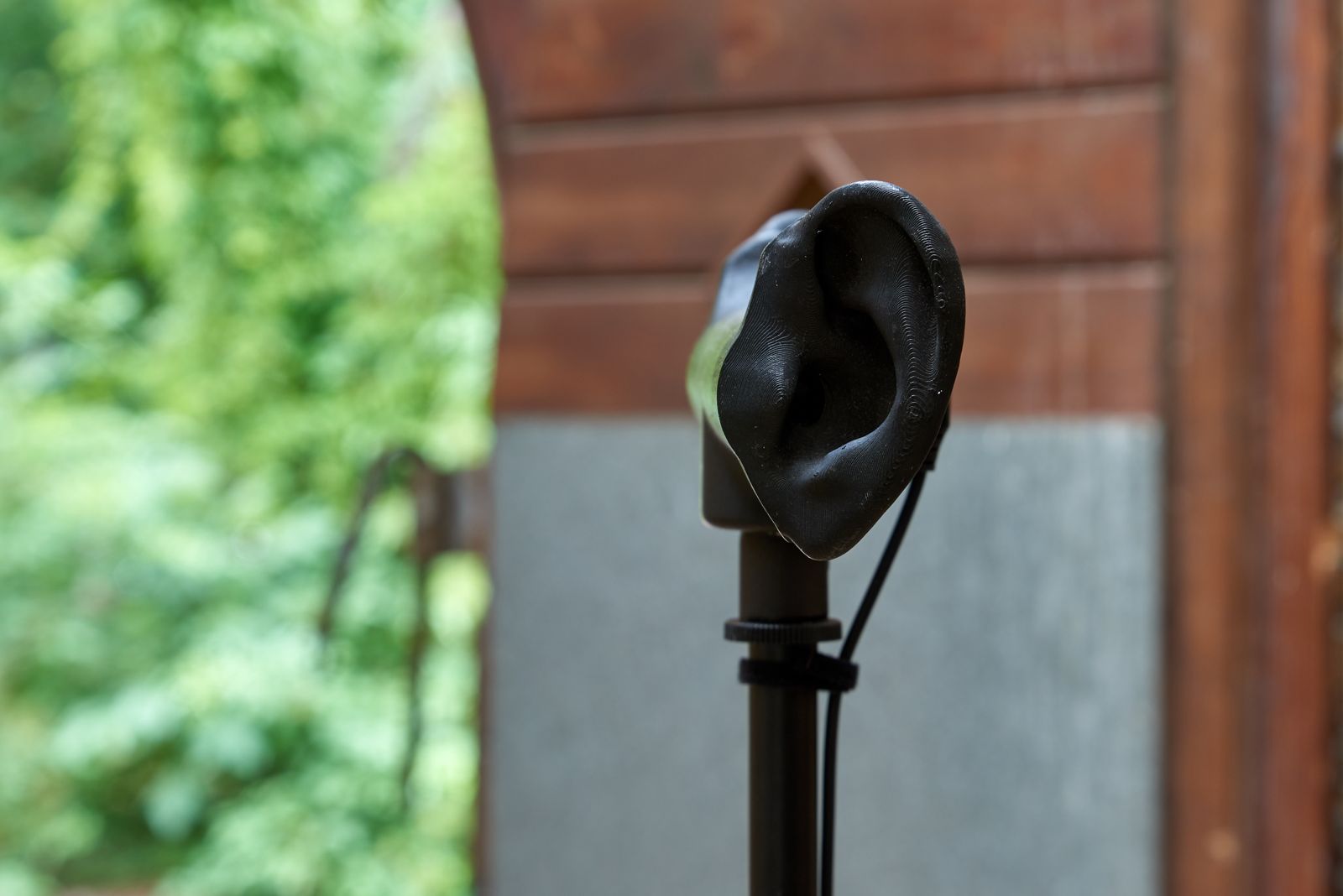
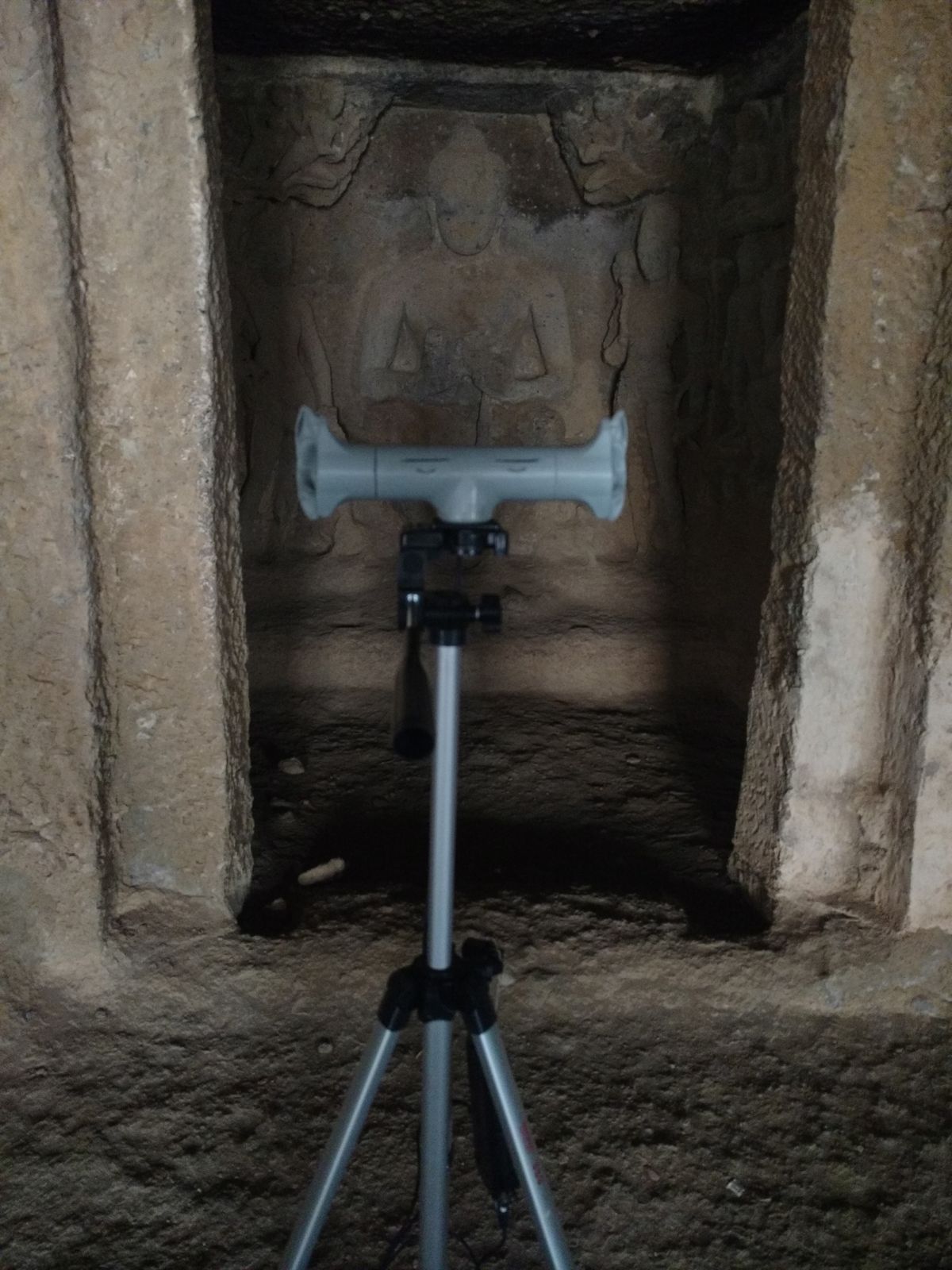
Binaural microphone. Kaan is Hindi for ‘ear’.Kaan captures sound the way we hear it, with our own ears. Listen to a Kaan recording on headphones or decent stereo speakers and you hear sound with spatial accuracy, as if you were standing in the place it was recorded.
What sets Kaan apart is its ear: a shape developed with a custom algorithm that averages more than 800 anatomical datasets of human ears, including the canal. That shape alone makes it exceptional in a spatial sense, ideal for on-site sound, foley and soundscapes. It records in 3D stereo instead of a traditional XY stereo rig.
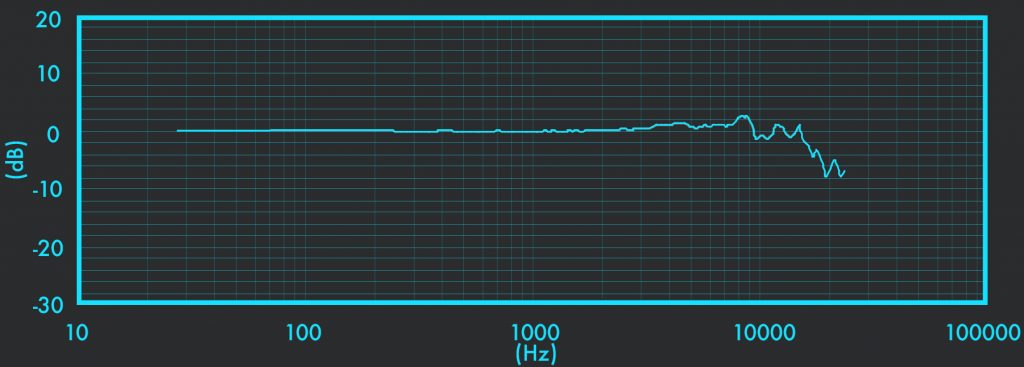
| Dynamic range | 105 dB SPL |
|---|---|
| Directionality | Omni |
| Sensitivity | −28 dB ±1.5 dB at 1 kHz |
| Signal-to-noise ratio | 80 dB at 1 kHz (1 Pa, A-weighted) |
| Max input level | 127 dB SPL |
How binaural recording works
We locate sounds using two ears and the shape of our head. A sound from the left reaches the left ear a fraction of a millisecond earlier and a little louder than the right, and the folds of the outer ear colour it differently depending on whether it comes from front, back, above or below. Together these cues are described by the head-related transfer function. Record at the ears, play back over headphones, and the brain receives the same cues it would have received in the room.
The ear canal adds its own resonance: as a short tube closed at the eardrum, it boosts frequencies around 3 kHz, the range where consonants and the ‘presence’ of a voice sit. Kaan includes the canal in its design so that recordings keep that natural presence.
The idea is older than recording itself. At the 1881 Paris Electrical Exhibition, Clément Ader’s théâtrophone sent the Paris Opéra to listeners through pairs of telephone receivers, one for each ear, and visitors reported hearing the singers move across the stage.
Each Kaan is assembled by hand and made to order.
Ask about KaanFurther reading
- Blauert, J. (1997). Spatial Hearing: The Psychophysics of Human Sound Localization (rev. ed.). MIT Press.
- Hammershøi, D. & Møller, H. (1996). Sound transmission to and within the human ear canal. Journal of the Acoustical Society of America, 100(1), 408–427. Link
- Théâtrophone (Clément Ader, 1881). Link
8knobs
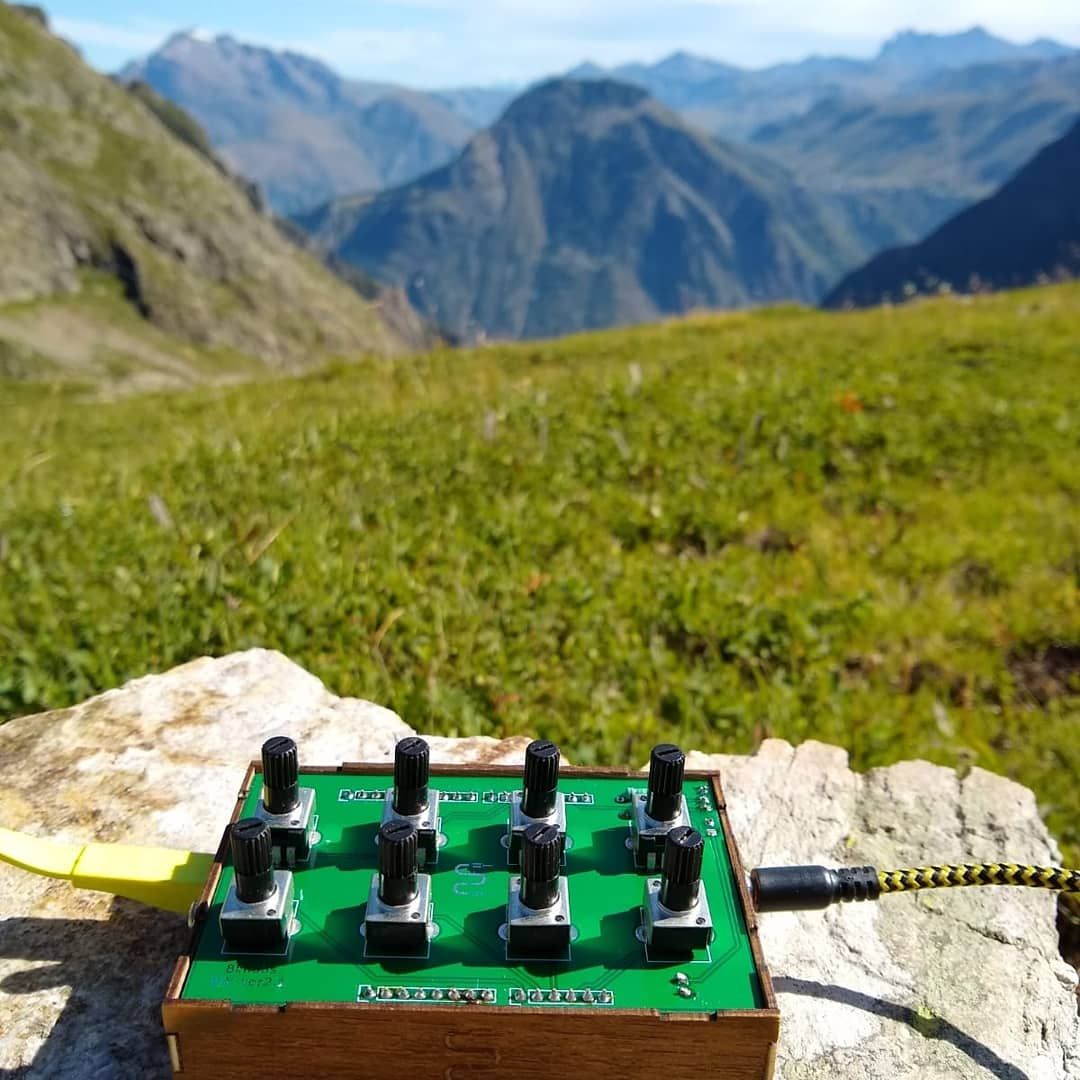
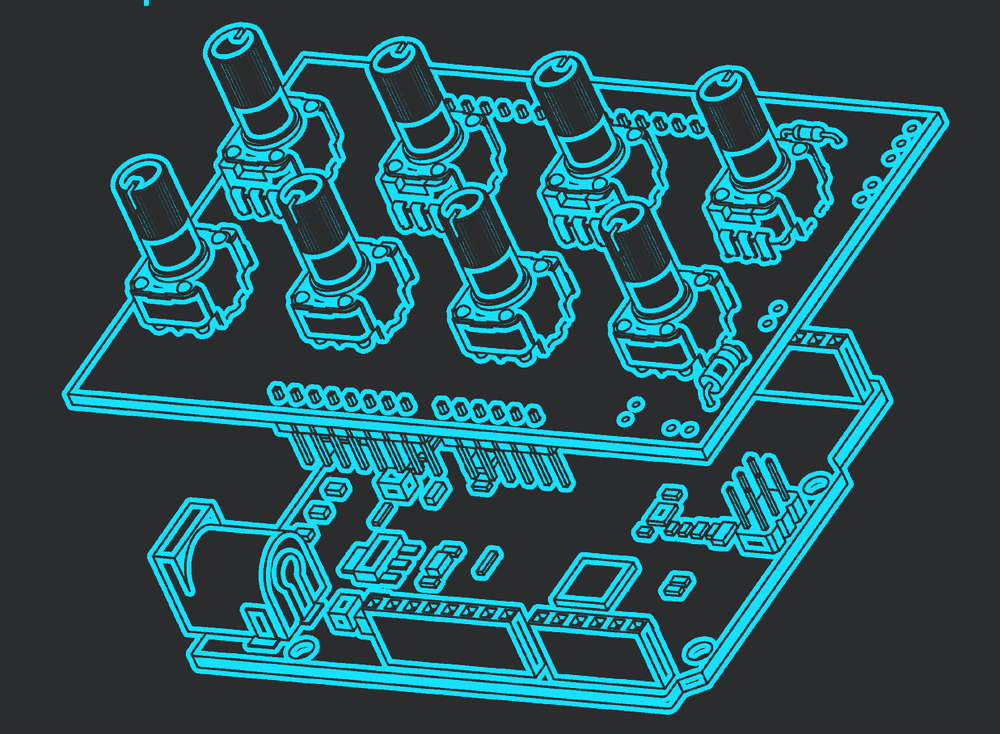
A pocket drone synth, USB MIDI controller and DIY kit.Eight knobs, an ATmega32u4 Arduino and the Mozzi synthesis library in a laser-cut wood body and a hand-stitched jute case. Out of the box each knob tunes one of eight breathing sine oscillators; flash another patch and it becomes a glassy chord machine, a beat box or a MIDI controller.
It is also a kit. Building one teaches soldering, synthesis and code by following a signal from a knob to a speaker, and we run it as a workshop.
Outpost
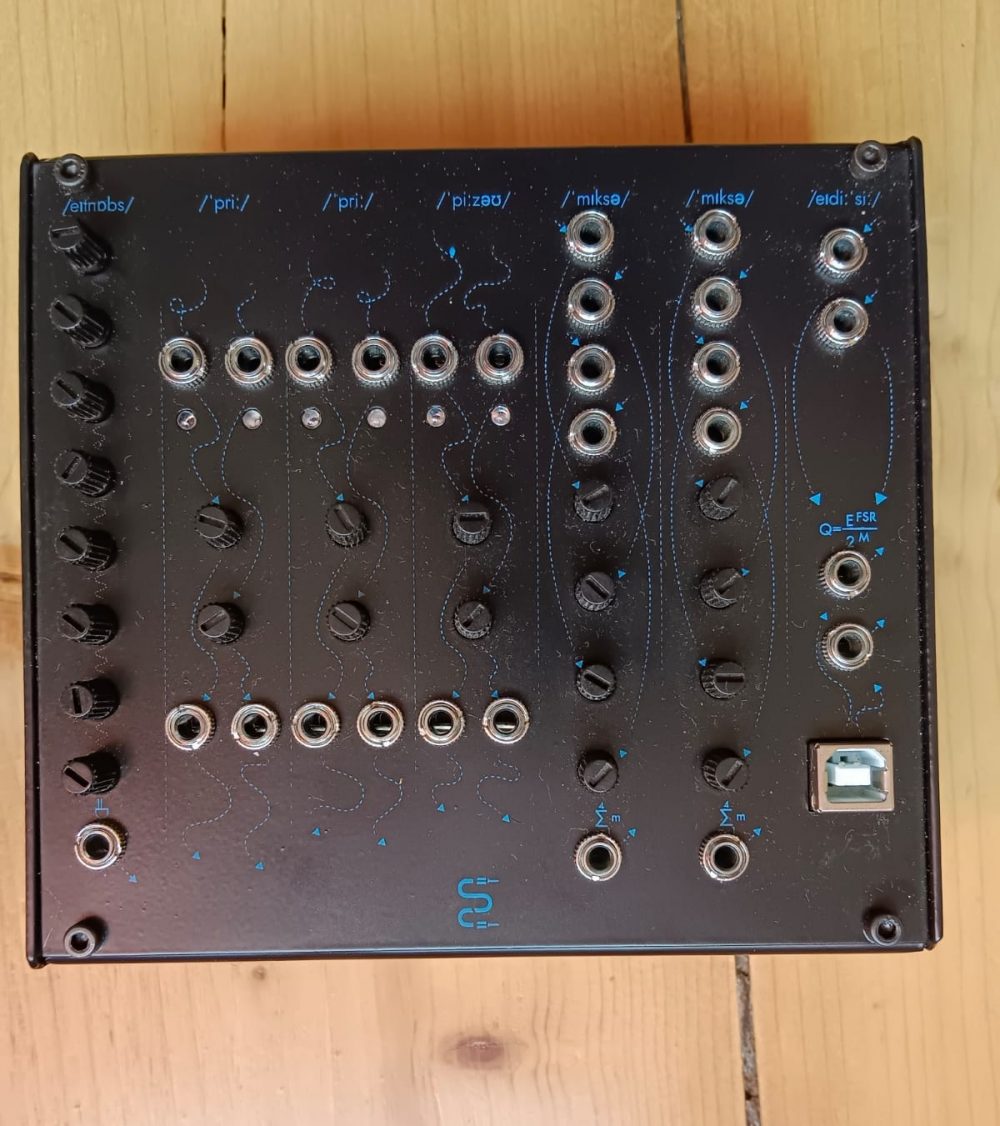
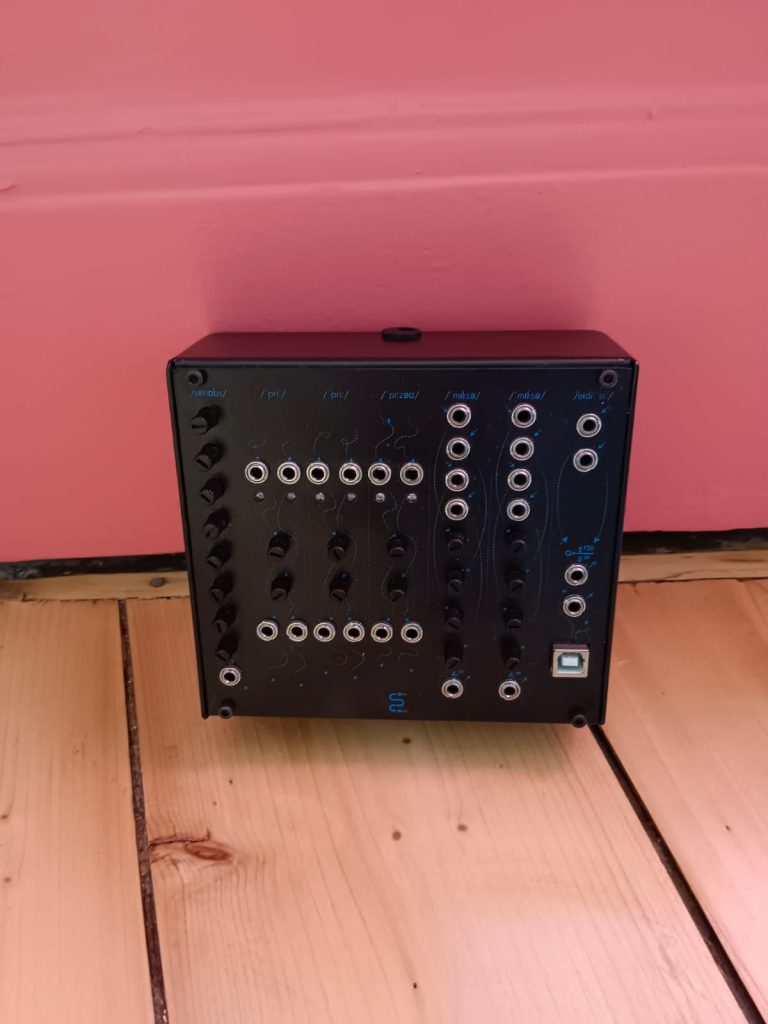
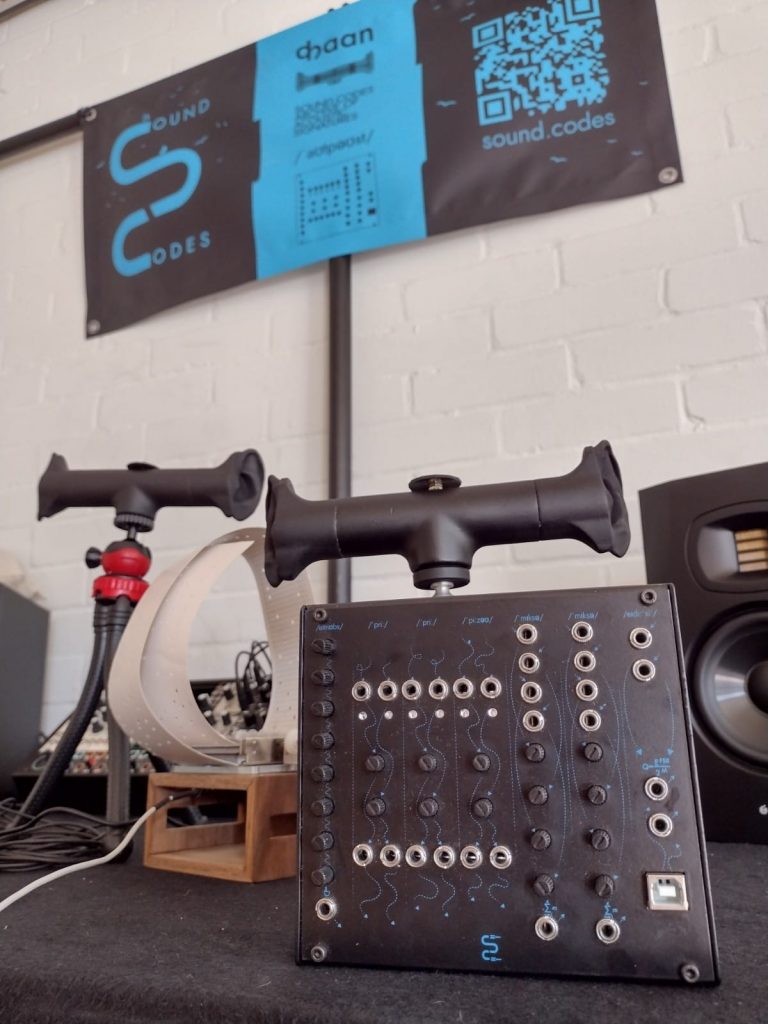
A field studio: synth, 8-channel mixer and sound card in one box.Mix and manage multiple input and output devices and formats to record and track anything, anytime, anywhere, on your own. Outpost is made for creatives and sound and music professionals on the move, and works just as well as a compact home studio.
It contains 8knobs, the sound.codes atmospheric drone generator, named for its eight oscillators that make pulsating, multi-harmonic drones. Four intelligent electret microphone inputs and two piezo inputs do impedance matching and pre-amplification. Use it for multi-channel live streams, plug it into single or multi-camera setups, or take it out for field recording.
Power it from 5 V USB, such as a power bank or phone charger, or from a 12 V DC adapter (not included). The free Outpost app turns your phone into a portable studio to record, store, share and manage recordings and their rights, including shared sessions over video call.
In the box
- 2 omnidirectional and 2 unidirectional electret microphones
- 2 Murata piezo transducers
- 1 EMF microphone
- USB A to B cable for the sound card
- USB 5 V to 12 V DC power cable
Listening in the field
Outpost grew out of years of recording heritage spaces and Himalayan villages, where the studio has to come along in a bag. Its inputs reflect three ways of listening. Electret microphones capture the air. Piezo transducers are contact microphones: pressed against wood, stone or metal, they pick up vibrations inside the material that you cannot hear in the room. The EMF microphone listens to electromagnetic fields, making the hum of chargers, cables and street lighting audible, an approach the artist Christina Kubisch has explored in her Electrical Walks.
The composer R. Murray Schafer and the World Soundscape Project in the 1970s argued that the sounds of a place are part of its identity and worth recording before they change. Outpost is built for that kind of listening, where every input is an attempt to hear a place more completely.
Why a drone
8knobs makes drones: long, slowly shifting tones built from eight oscillators. The drone is one of the oldest foundations of music, from the tanpura in Indian classical music to the work of La Monte Young, Éliane Radigue and Pauline Oliveros. A sustained tone gives the ear time to notice the beating between close frequencies and the harmonics that come and go, which is exactly what 8knobs lets you play with.
Ask about OutpostFurther reading
- Schafer, R. M. (1977). The Tuning of the World. Knopf. (Republished as The Soundscape, 1994.)
- Kubisch, C. Electrical Walks, ongoing series. Link
- Oliveros, P. (2005). Deep Listening: A Composer’s Sound Practice. iUniverse.
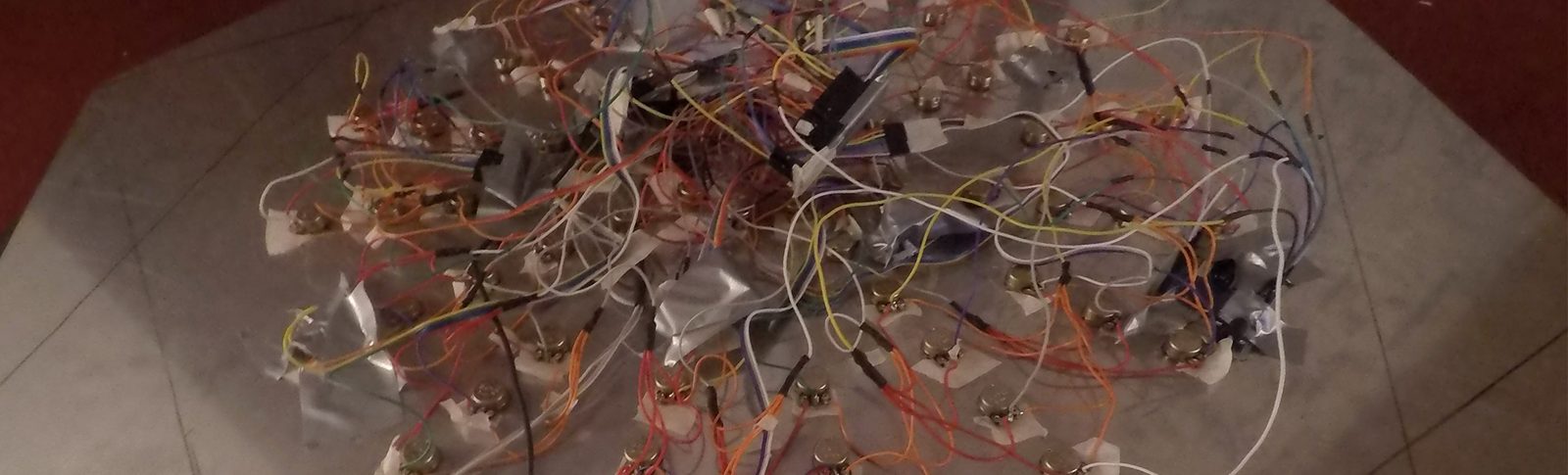
DroneKnobs
An open-source, hacker-friendly synthesiser, built for KarmaQuad.Information transmitted as experience, experience being the information: an informal way to communicate synthesis. DroneKnobs shows signal flow and how an enthusiast platform like Arduino can shape waveforms and envelopes in lo-fi 8-bit sound. It’s a panel of knobs oscillating in time; you dial in the position, controlling frequency or sending control changes.
The build reads analog inputs through a 16-channel CD74HC4067 multiplexer to control oscillators and phase modulation, smoothing control signals at audio rate. It also uses AutoMap, which maps unpredictable inputs to a set range. A cosine wavetable gives a range of 8 Hz to 8,184 Hz, with control modulation from 0 to 127. The panel uses 3 Nanos with a mux, 3 Leonardos with 2 muxes, and one Uno.
- Audio output on digital pin 9
- Potentiometers on A1–A8, A10, A11
- MUX74HC4067: signal to A0, EN to pin 13, S0 to 11, S1 to 7, S2 to 5, S3 to 3
- Potentiometers on mux channels 0–9
- Audio output on digital pin 9
- Potentiometers on A1–A7
- MUX74HC4067: signal to A0, EN to pin 13, S0 to 11, S1 to 7, S2 to 5, S3 to 3
- Potentiometers on mux channels 0–9
- Audio output on digital pin 9
- Potentiometers on A1–A5
- MUX74HC4067: signal to A0, EN to pin 13, S0 to 11, S1 to 7, S2 to 5, S3 to 3
- Potentiometers on mux channels 0–9
Depends on Mozzi and CD74HC4067.
Under the hood
DroneKnobs runs on Mozzi, an open-source sound synthesis library for Arduino created by Tim Barrass, which lets a small microcontroller generate audio-rate signals. Phase modulation, one of the techniques DroneKnobs uses, is a close relative of the frequency modulation synthesis that John Chowning developed at Stanford in the late 1960s and published in 1973; it went on to power the Yamaha DX7, one of the best-selling synthesisers ever made. On DroneKnobs it is reduced to its essentials and put under your fingers: turn a knob and you hear new harmonics bloom out of a single tone.
Circuit, code and laser-cut design on GitHubFurther reading
Need something custom?
We build hardware for installations, performances and research. Tell us what you have in mind.
contact@sound.codes