
Megaphone
A 2.4 m bronze horn, over 600 kg, that carries the human voice without electricity.
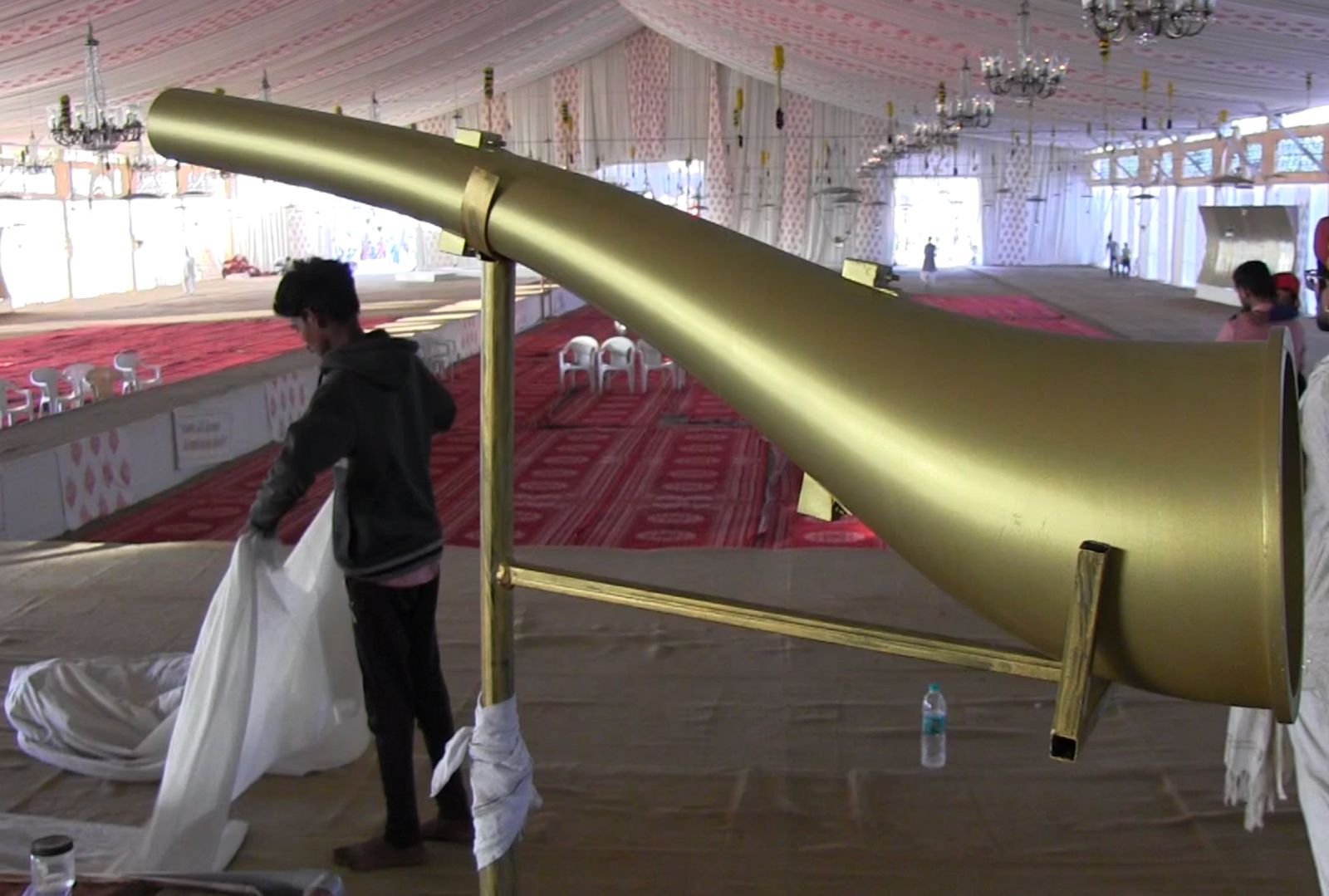
An experiment to amplify the voice without electricity.
Megaphone is a 2.4-metre horn of bronze weighing more than 600 kg. It has no speaker, no amplifier and no battery. A person speaks into the narrow end and the shape of the metal does the rest, carrying the voice across a gathering. It is a sculpture that works: a piece of fabrication at the edge of what can be cast and joined in bronze, and an acoustic instrument tuned for speech.
A shape found in every culture
The horn is one of the oldest acoustic forms we have, and it appears across cultures and across time. Ram’s-horn shofars, conch shells blown as the shankha in Indian ritual, the long dungchen of Tibetan monasteries and the curved bronze cornu that relayed commands to Roman legions all use the same geometry: a narrow throat that opens into a wide mouth. Generals addressed armies through horns, heralds announced kings in court, priests called people to prayer. In Greek theatre, actors’ masks are said to have carried small cones at the mouth, and a drawing by Louis Nicolas from around 1675 shows a chief addressing his people through a tube of birch bark.
In the 1670s the horn became a scientific instrument. Samuel Morland in England published his ‘Tuba Stentoro-Phonica’, a long copper speaking trumpet that he reported could carry a voice for well over a mile, and the Jesuit scholar Athanasius Kircher answered with Phonurgia Nova (1673), describing spiral horns built into walls and claiming the invention as his own. Two centuries later Thomas Edison was still experimenting with giant funnels to throw the voice across a field. The geometry kept returning because it works.
Why a horn works
The voice is a small source pushing against a very large, very light medium: open air. Most of the energy from the throat and lips never makes it out, because the two are badly matched, the way a thin rope can’t move a heavy door. Acousticians call this an impedance mismatch. A horn fixes it gradually. Its narrow throat presents the voice with something it can push against efficiently, and its slowly widening walls hand the pressure on to an ever larger area of air until, at the mouth, the sound radiates freely. Arthur Gordon Webster set out the mathematics of this in 1919, and it still underlies horn loudspeakers today.
Our own bodies already use the principle. The vocal tract, from the larynx past the tongue to the lips, behaves acoustically like a tube of changing width, a horn that shapes every vowel we make. The profile of Megaphone was computed and sculpted algorithmically from that idea, and its swelling form recalls the back of the tongue: the instrument is an outward continuation of the voice it carries.
Learning from Indian architecture
The research began with buildings designed to carry the voice without technology. The marble halls of the Luna Vasahi and Pittalhar temples in the Dilwara group at Mount Abu were studied for how they propagate chanting and speech. The great dome of the Gol Gumbaz in Bijapur, where a whisper on one side of the gallery is heard on the other, showed how curved surfaces can gather and focus sound. Jain, Buddhist and Hindu temples and caves across India, many of them in our archive, offered further acoustic peculiarities to learn from.
How it was made
Feasibility
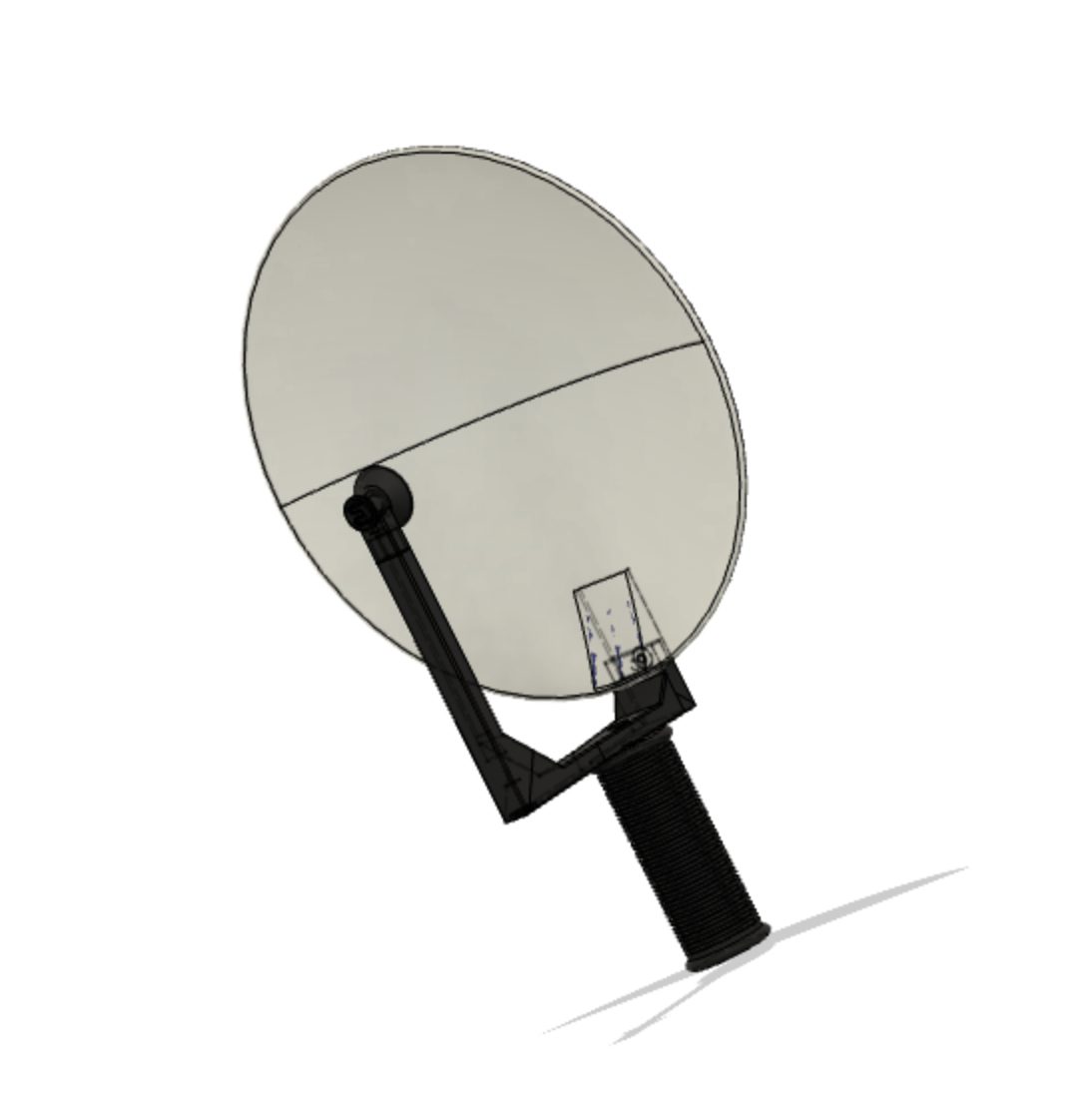
A study of historical megaphone designs and of parabolic geometry for concentrating distant sound, comparing different approaches on paper and in 3D.
Prototyping and simulation
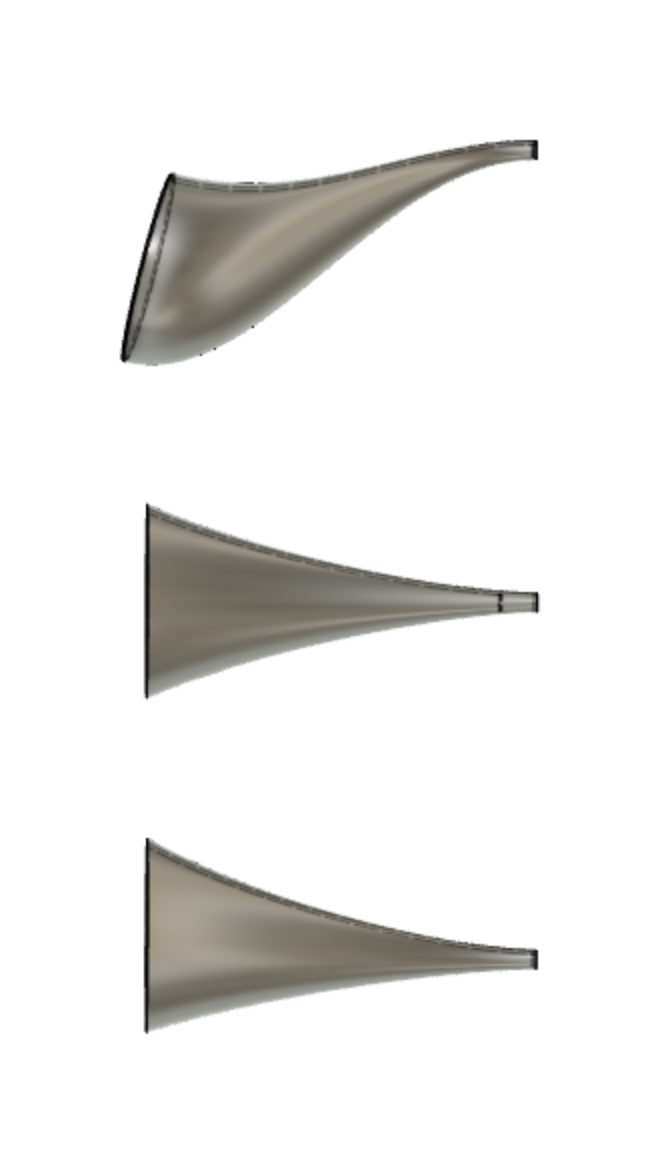
Computer simulation of the acoustic interaction across 400 Hz to 12 kHz, which covers the range of human speech, roughly 800 Hz to 4 kHz. It indicated that speech would be reinforced with an efficiency of roughly 15–20%.
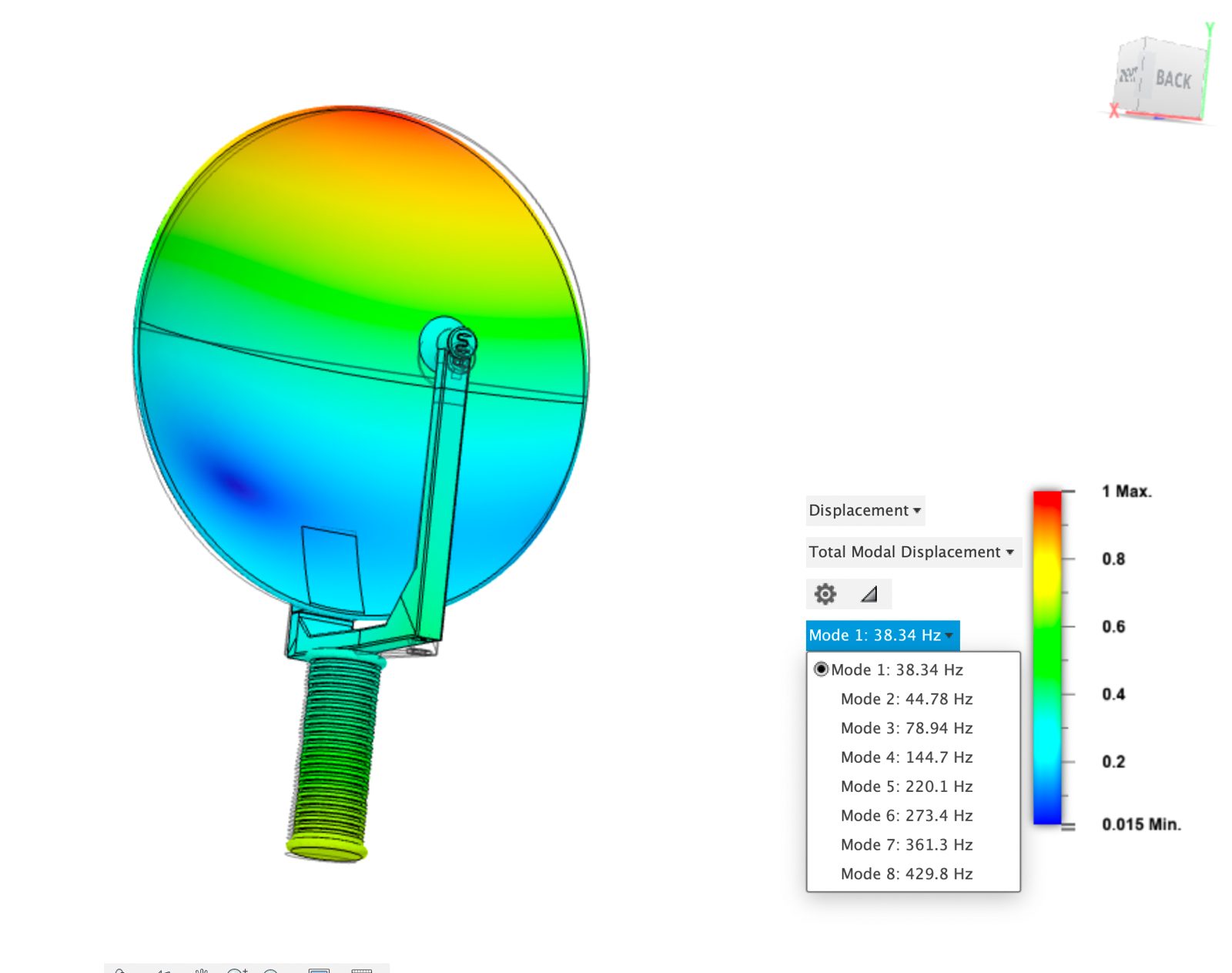
A 300 mm parabola with a focal length of 15.2 cm was then tested in an open field. A loudspeaker played a test sound at 80 dB SPL; at 3 m it had fallen to 71.5 dB SPL, while the parabola at the same distance, recorded with our Kaan binaural microphone, captured 76 dB SPL, a gain of about 4.5 dB from shape alone.
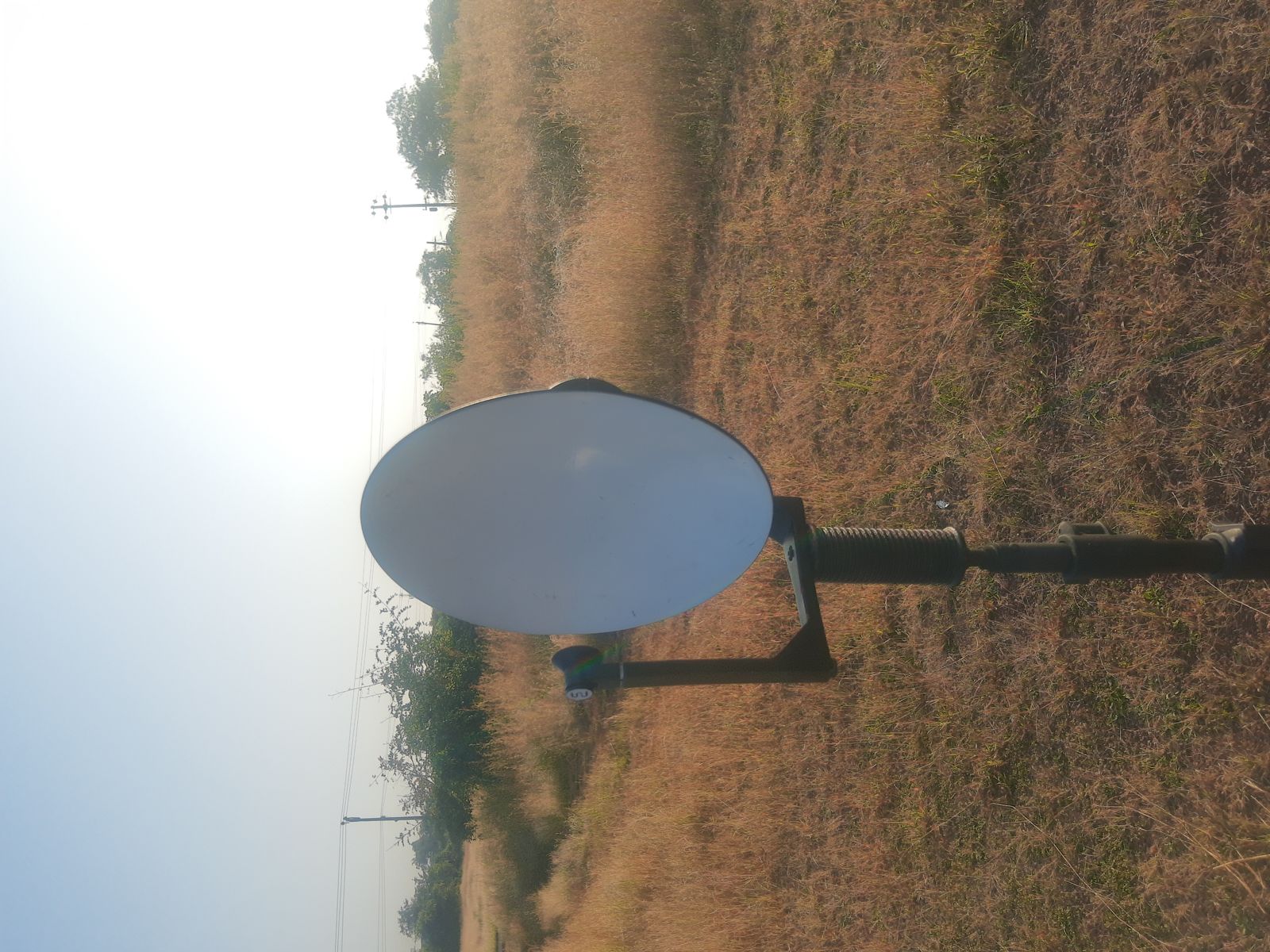
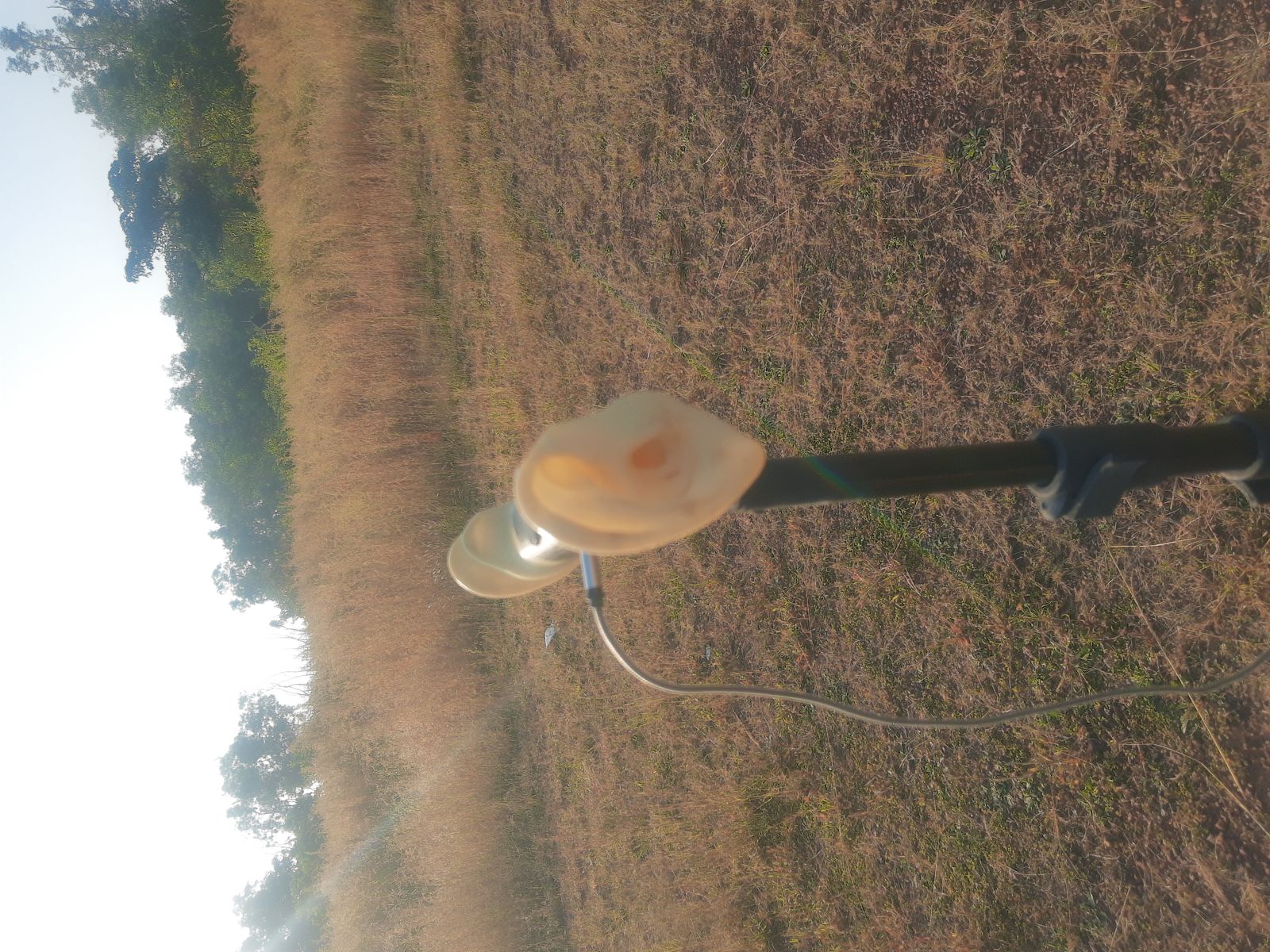
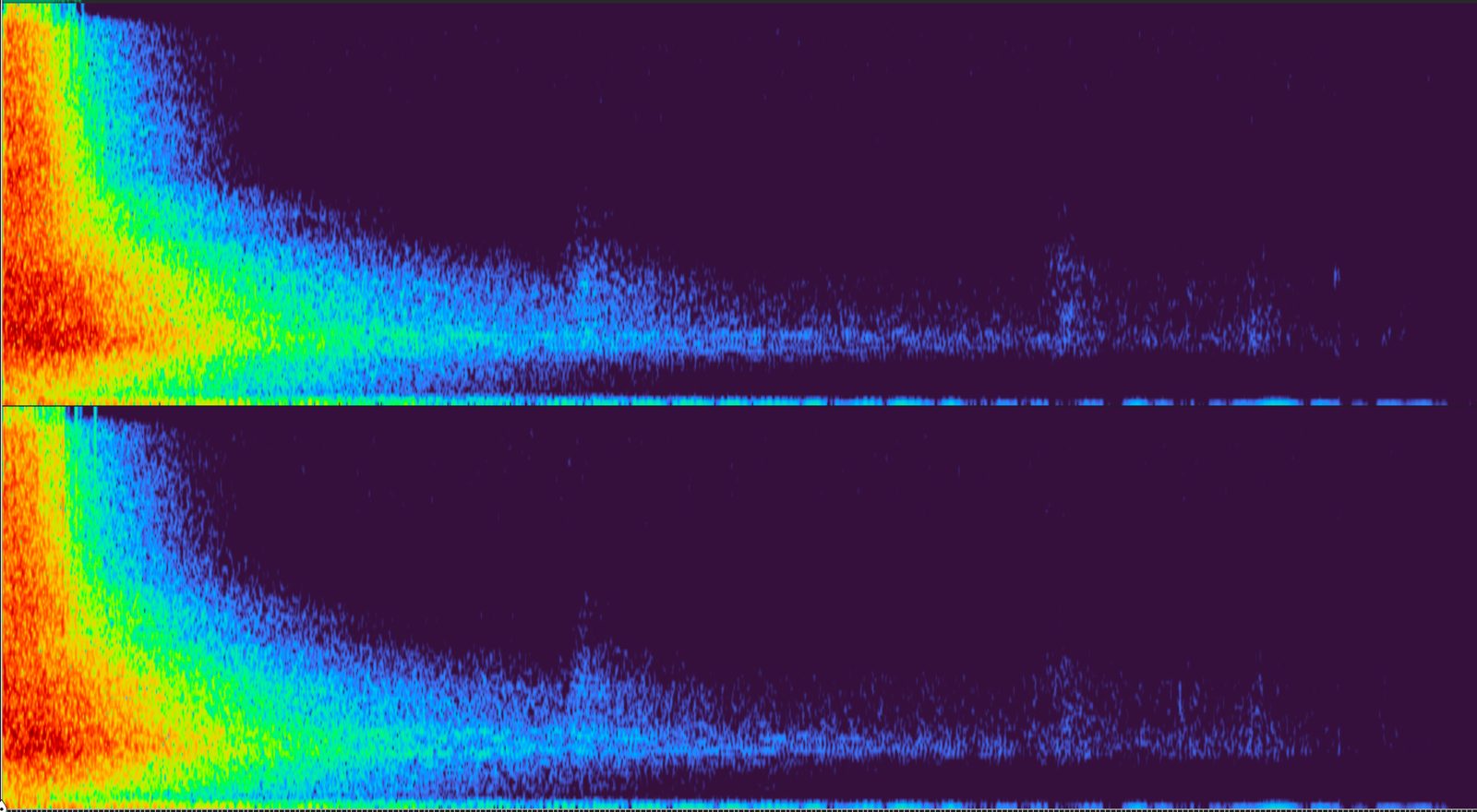
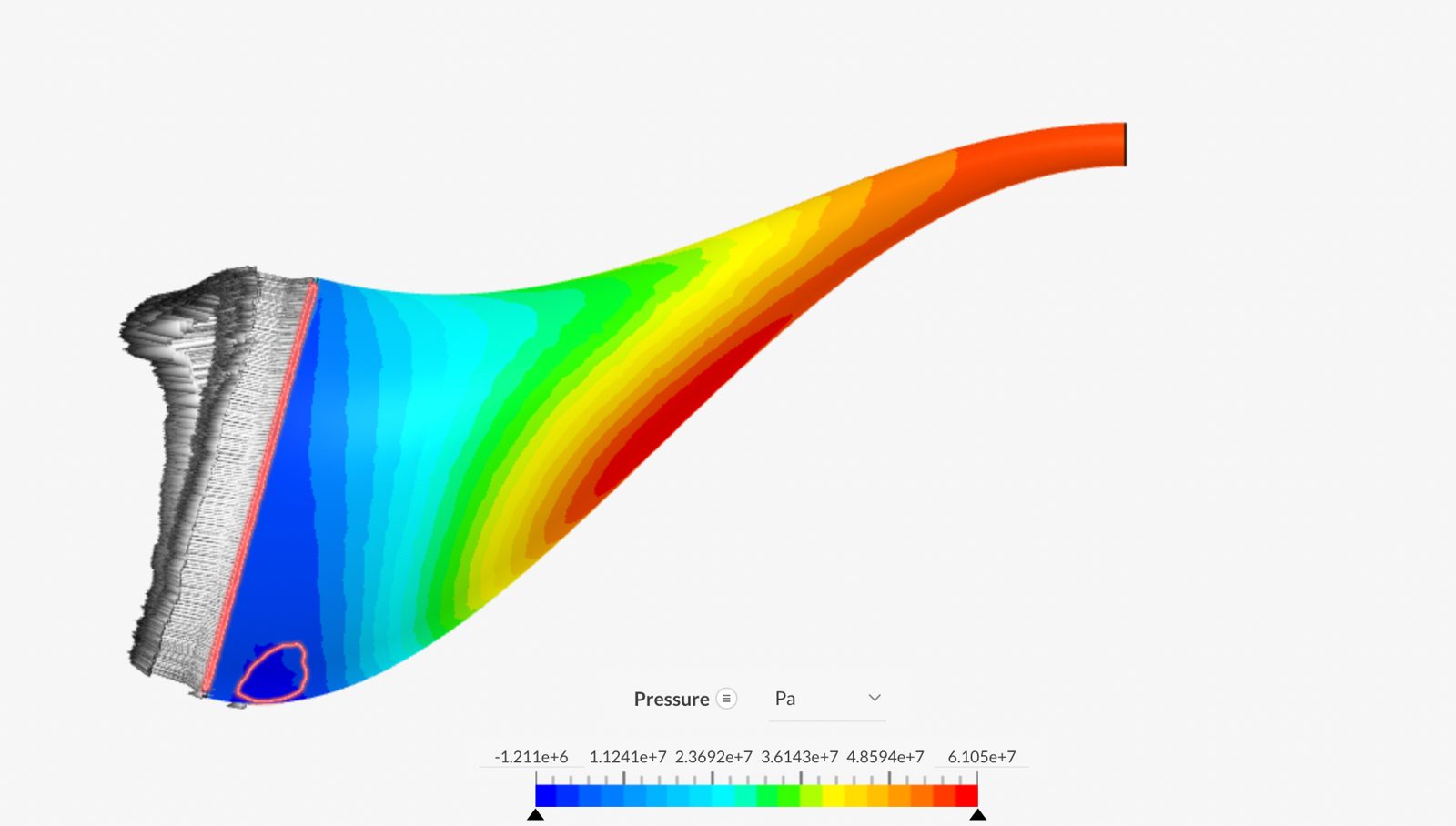
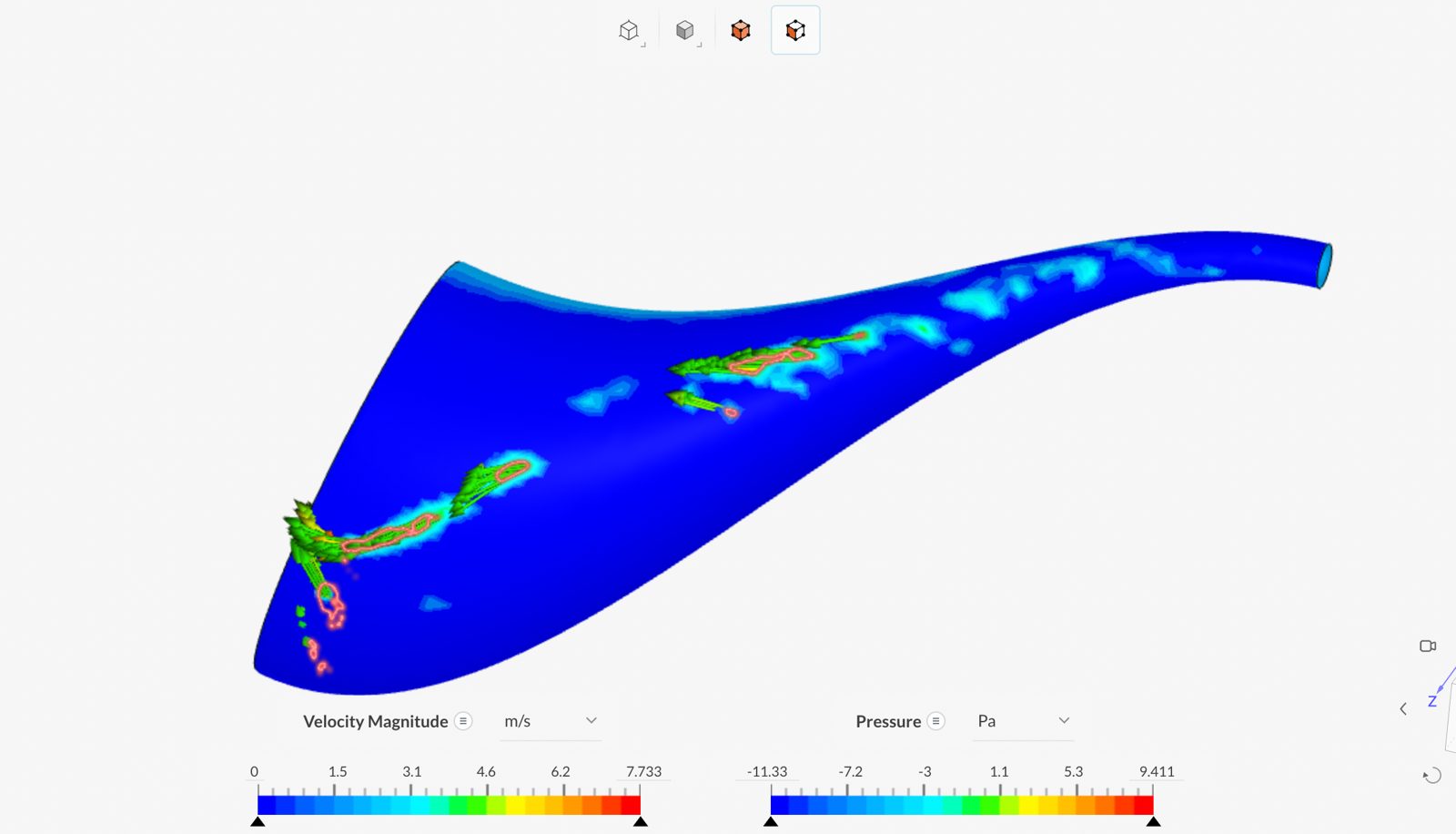
Test results: reflection from the parabola. Computational flow analysis of the horn mapped its low- and high-pressure zones, while flow vectors showed how energy moves through it and where it is directed. The difference in pressure indicated a gain of 24–30%.
Prototype
Prototype megaphones, including a three-cone version and extension points, tested together with the parabola, alongside guidelines for the space and the materials used in it.
Fabrication
The final horn was fabricated in bronze, about 2.4 m long and over 600 kg, and installed with guidelines for the space based on how people, materials and air interact with it.
Why without electricity
The project extends a long study of Indian architecture and archaeoacoustics, and it carries an ecological argument. The real cost of electricity is far more than the price per unit on a bill. Every generator and power plant has an external cost in air, water and soil pollution and in health. Even solar, wind and tidal power depend on batteries made from minerals and heavy metals extracted from the ground, with long-term ecological and social impact. A horn that carries a voice to a crowd with no power at all is a small, solid reminder that architecture and form once did this work, and still can.
References
- Webster, A. G. (1919). Acoustical impedance, and the theory of horns and of the phonograph. Proceedings of the National Academy of Sciences, 5(7), 275–282. Link
- Morland, S. (1671). Tuba Stentoro-Phonica: an instrument of excellent use, as well at sea as at land. London. Link
- Kircher, A. (1673). Phonurgia Nova. Kempten. Link
- Fant, G. (1960). Acoustic Theory of Speech Production. Mouton.
- Sachs, C. (1940). The History of Musical Instruments. W. W. Norton. Full text on the Internet Archive. Link
- Megaphone: history of the speaking trumpet, including Louis Nicolas’s drawing (c. 1675) and Edison’s experiments (1878). Link
- Cornu (Roman military horn). Link
- Tibetan horn (dungchen). Link
- Gol Gumbaz, Bijapur: whispering gallery. Sonic Wonders. Link
Have a space, a sound or an idea?
We design custom immersive experiences and tools for artists and businesses, and we’re always looking for spaces to listen to.
contact@sound.codes