

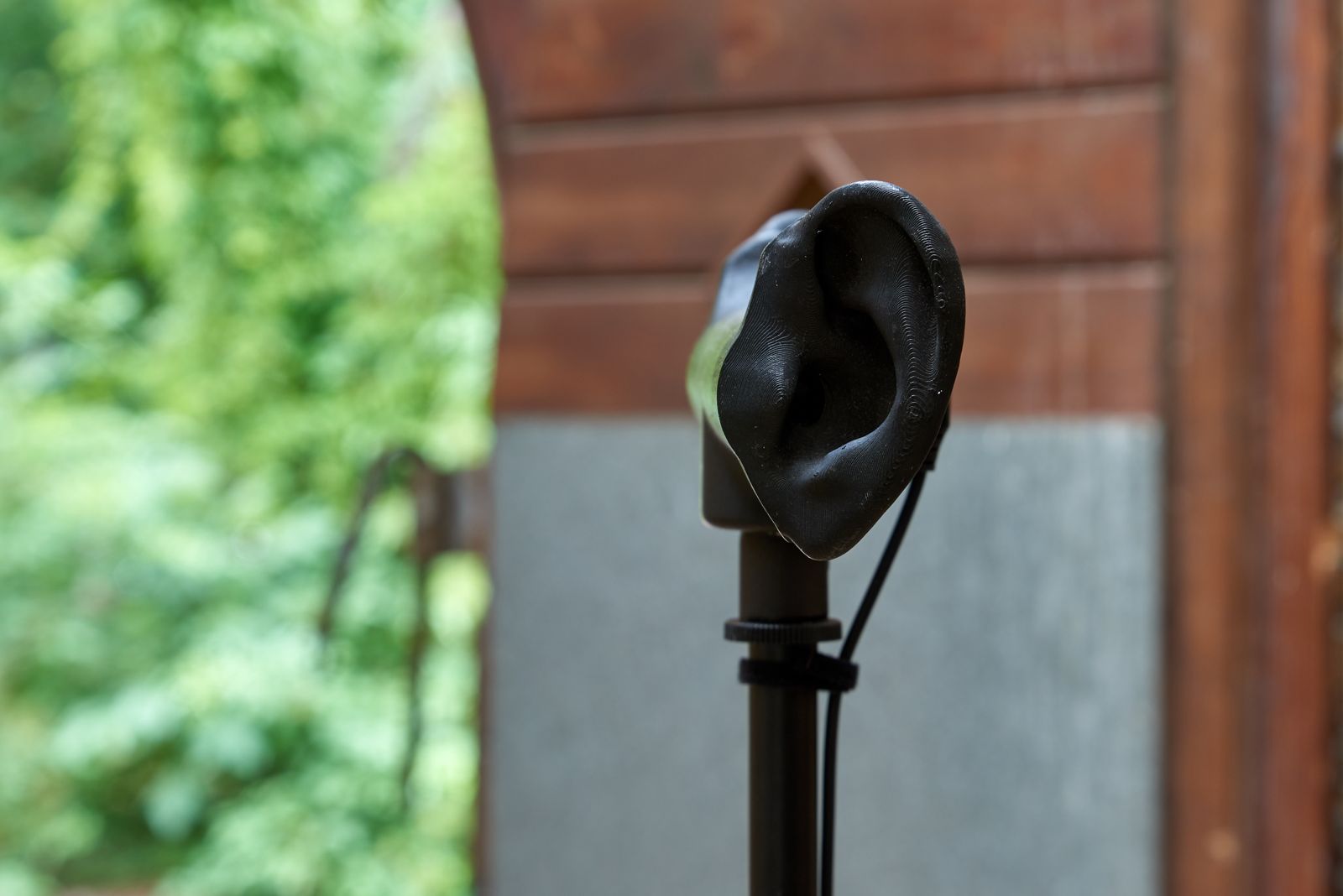
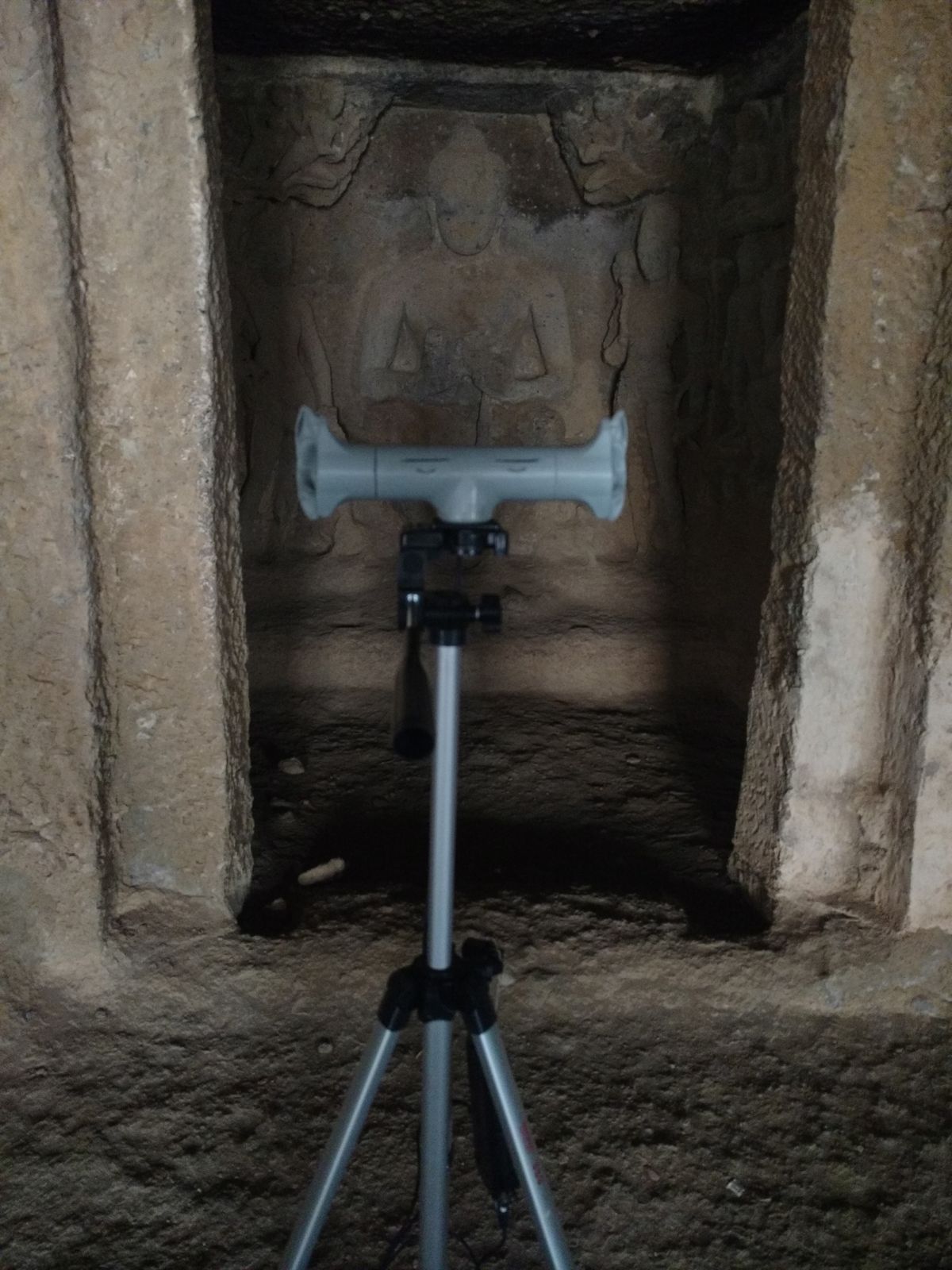
Kaan captures sound the way we hear it, with our own ears. Listen to a Kaan recording on headphones or decent stereo speakers and you hear sound with spatial accuracy, as if you were standing in the place it was recorded.
What sets Kaan apart is its ear: a shape developed with a custom algorithm that averages more than 800 anatomical datasets of human ears, including the canal. That shape alone makes it exceptional in a spatial sense, ideal for on-site sound, foley and soundscapes. It records in 3D stereo instead of a traditional XY stereo rig.
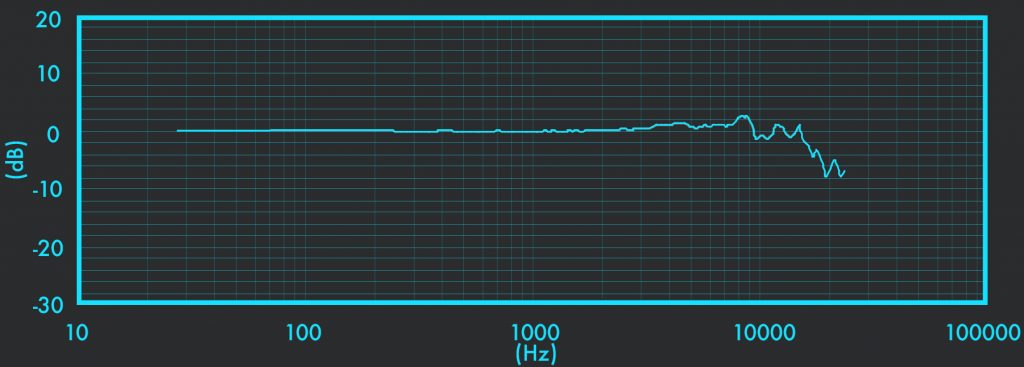
| Dynamic range | 105 dB SPL |
|---|---|
| Directionality | Omni |
| Sensitivity | −28 dB ±1.5 dB at 1 kHz |
| Signal-to-noise ratio | 80 dB at 1 kHz (1 Pa, A-weighted) |
| Max input level | 127 dB SPL |
How binaural recording works
We locate sounds using two ears and the shape of our head. A sound from the left reaches the left ear a fraction of a millisecond earlier and a little louder than the right, and the folds of the outer ear colour it differently depending on whether it comes from front, back, above or below. Together these cues are described by the head-related transfer function. Record at the ears, play back over headphones, and the brain receives the same cues it would have received in the room.
The ear canal adds its own resonance: as a short tube closed at the eardrum, it boosts frequencies around 3 kHz, the range where consonants and the ‘presence’ of a voice sit. Kaan includes the canal in its design so that recordings keep that natural presence.
The idea is older than recording itself. At the 1881 Paris Electrical Exhibition, Clément Ader’s théâtrophone sent the Paris Opéra to listeners through pairs of telephone receivers, one for each ear, and visitors reported hearing the singers move across the stage.
Each Kaan is assembled by hand and made to order.
Ask about KaanFurther reading
- Blauert, J. (1997). Spatial Hearing: The Psychophysics of Human Sound Localization (rev. ed.). MIT Press.
- Hammershøi, D. & Møller, H. (1996). Sound transmission to and within the human ear canal. Journal of the Acoustical Society of America, 100(1), 408–427. Link
- Théâtrophone (Clément Ader, 1881). Link
Need something custom?
We build hardware for installations, performances and research. Tell us what you have in mind.
contact@sound.codes