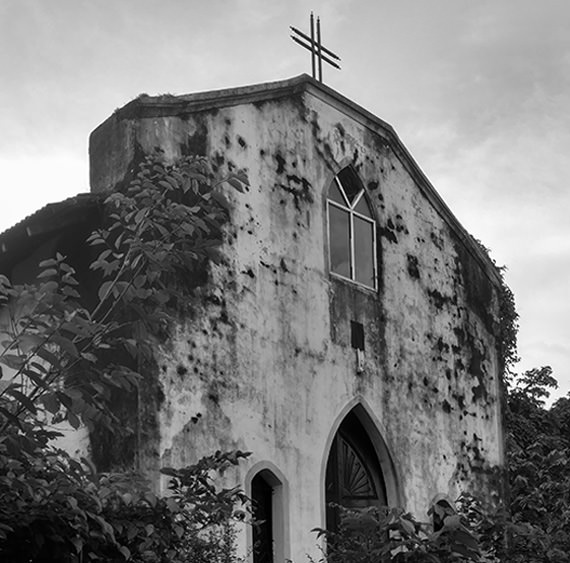
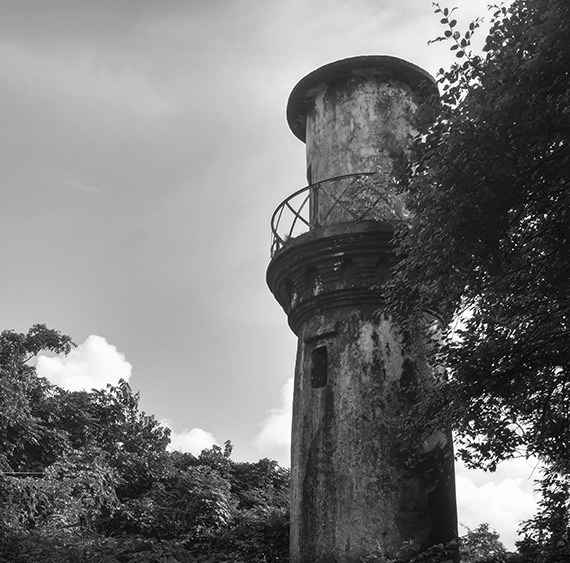
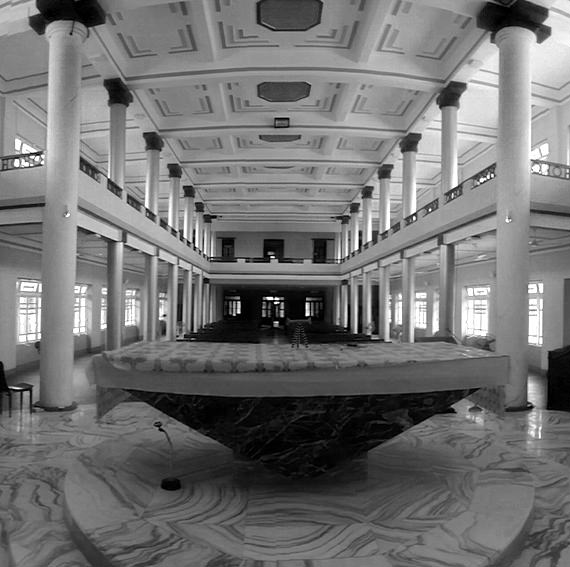
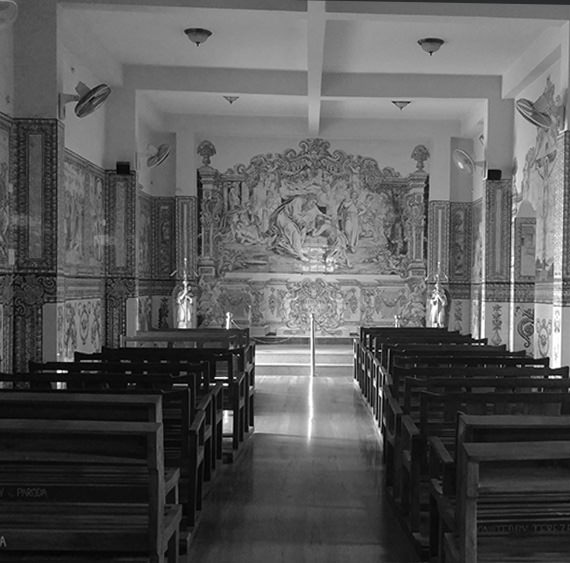
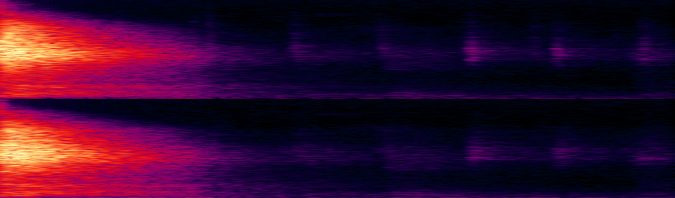
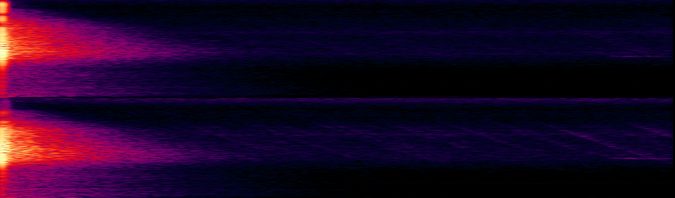
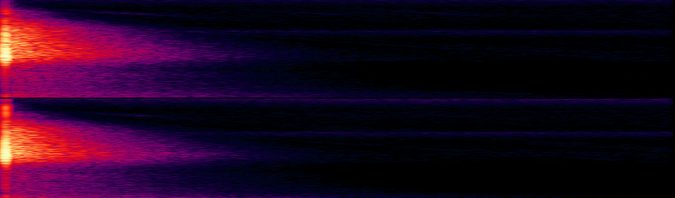
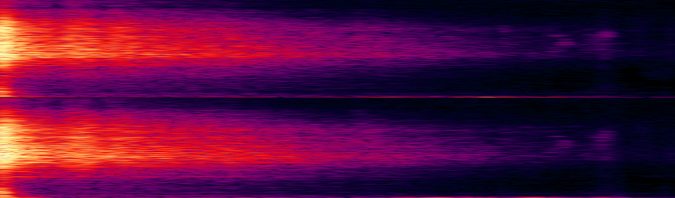
Sound measures space and makes it comprehensible. We stroke the boundaries of space with our ears.
An alternative exploration of Goan history and heritage: a back door where the past presents itself not as historical data or art, but as experience. Each of these 23 spaces is conserved through the acoustic data that has endured through time, its acoustic signature.
Archived for
Story of Space, 2017
Curator
Shazeb Shaikh
Supported by
Modi Digital
Thanks to
Archaeological Survey of India; Goa State Archives and Archaeology
Turn this on and scroll. Each space plays as you reach it, fading into the next, so you travel through Goa by ear. Headphones recommended.
Stop 1 of 23
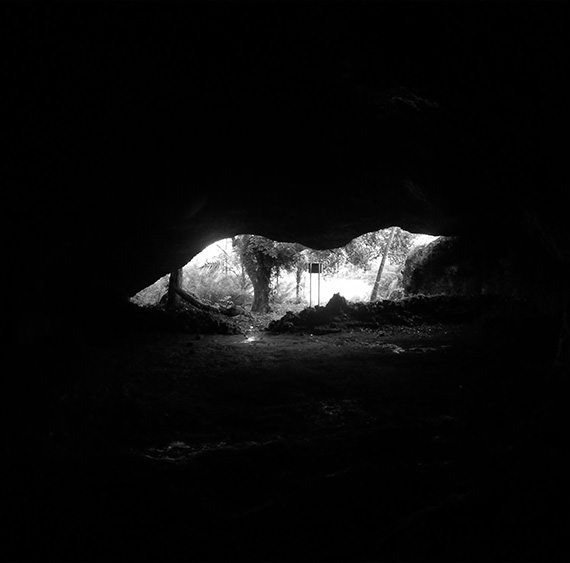
Rivona natural caves
0.60sreverberation time
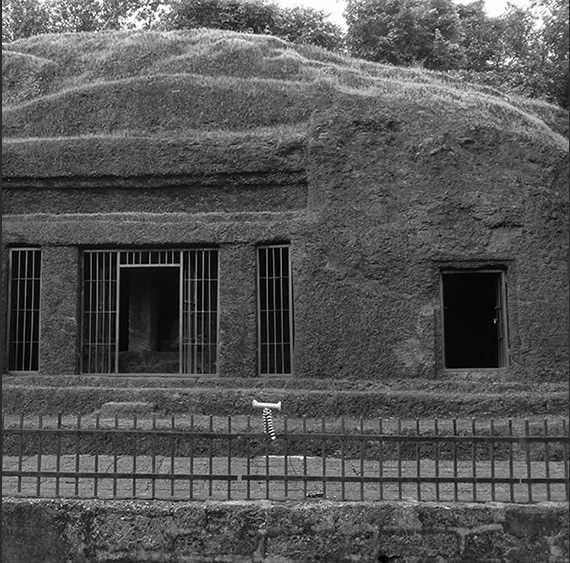
Rivona caves are one of the finest spatial examples of Buddhist influence in Goa. This laterite structure is believed to be a natural cave, inhabited until the 6th–7th century. A distinguishing feature is a ‘Pitha’, which supposedly served as a seat for a teacher.
The influence of Buddhism is evident not only in the design and architecture, but also in the spiritual serenity that the caves offer as an experience.
Stop 2 of 23
Rivona cave 2
1.59sreverberation time
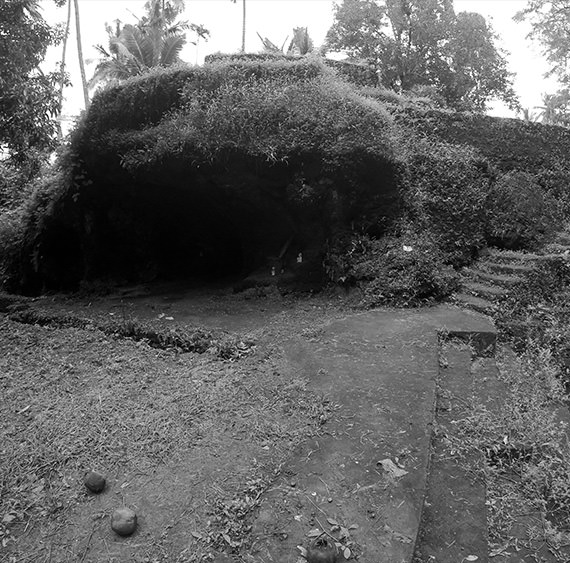
The first impression at the entrance of the Rivona caves is a 16th-century stepped well with an idol of Hanuman. It is a three-chambered structure; the outer and middle chambers are probably natural. Along the middle chamber, a cistern to the left has a natural feed from above, while steps carved opposite it lead out to the top of the structure. The inner chamber is the meditation chamber.
This cave shows the relationship between early Buddhism and the tantric Brahminical, or tantra yogini, tradition of Hinduism.
Stop 3 of 23
Margaon cave
0.74sreverberation time
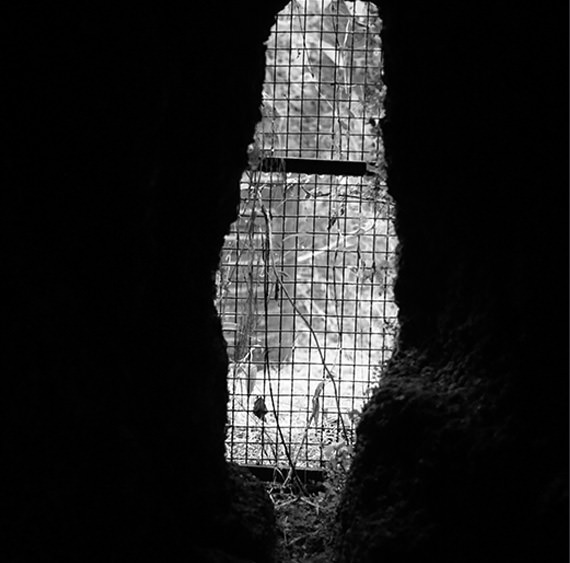
Hidden behind a church wall, forgotten in time, lies a single cave: the last remnant of the old Margaon cave complex. For company it has an active Shiva temple with carvings on its roof, a linga and an idol of Nandi.
Stop 4 of 23
Lamgau natural cave
0.36sreverberation time
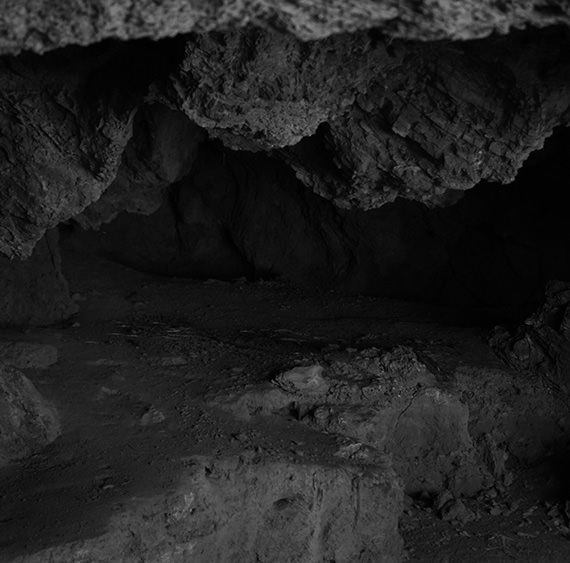
The Lamgau caves are two man-made caves cut out of decomposed laterite rock, nestled among Areca palms. They were built by Buddhist monks and later inhabited by Hindu saints. The transition is visible in the stone-cut Shiva linga and the statue of Nandi in the courtyard.
Rock carvings adorn the ceilings of these caves, which were once a prominent place for meditation and learning.
Stop 5 of 23
Arvalem caves
2.27sreverberation time
Near the Arvalem falls in Bicholim taluka, these caves can be traced back to the 6th–7th century. They may have been made by Buddhist monks or by Brahmins. Five hollow chambers are carved out of a single laterite rock, believed to have sheltered the Pandavas during their exile.
Stop 6 of 23
Kurdi Mahadev temple
0.83sreverberation time
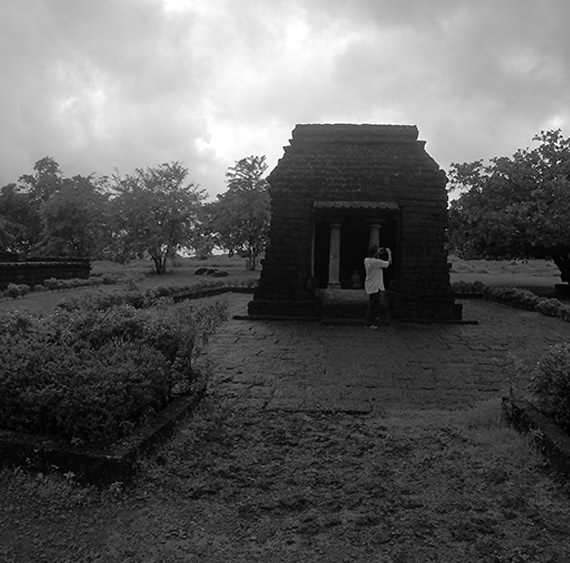
This 11th-century temple originally stood on the banks of the Salaulim river, about 17 km from where it is today. When the Salaulim dam submerged the village, the temple was rebuilt brick by brick at its new site over eleven years.
It now has a garbhagriha (sanctum) and a porch in basalt and laterite. Being close to the dam, a clearly audible hum in its ambience adds the story of its move to the acoustics of the temple.
Stop 7 of 23
Tambdi Surla Mahadev
0.86sreverberation time
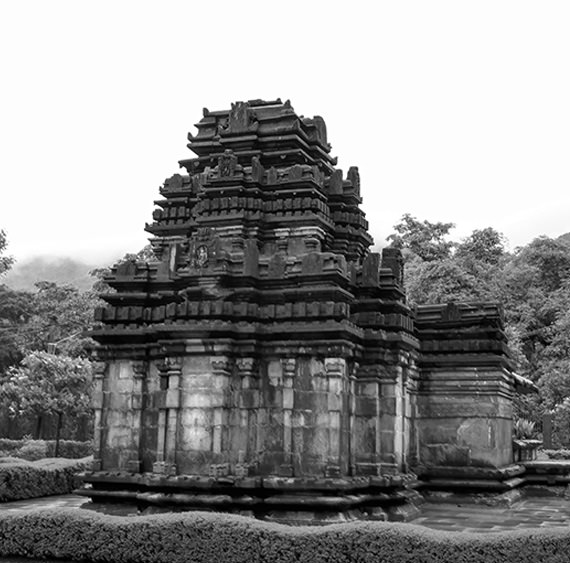
A 12th-century Shaivite temple to Lord Mahadeva that is still an active place of worship. It was built in the Hemadpanti style with basalt carried across the mountains from the Deccan plateau and carved by skilled craftsmen.
The temple has a garbhagriha, an antarala (antechamber) and a mandapa with four basalt pillars carved with elephants. They are hooked to chains that support a stone ceiling decorated with finely carved Ashokan lotus flowers.
Stop 8 of 23
Aguada Fort, underground water tank
14.74sreverberation time
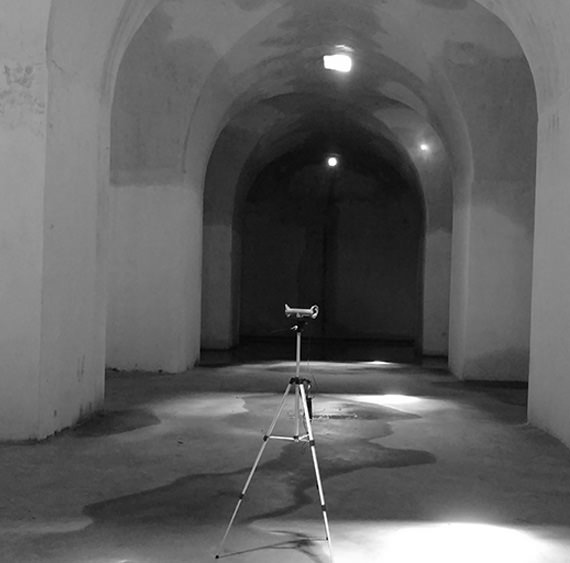
Built in 1612, Aguada was one of the most formidable Portuguese forts in India. Its four-storey lighthouse, erected in 1864, is the oldest of its kind in Asia. The fort’s enormous cistern was among the largest in Asia at the time, holding over 20,00,000 gallons of water.
The upper part of the fort served as fort and watering station, the lower part as a safe berth for Portuguese ships. Besides the moat, underground water chamber, gunpowder room, lighthouse and bastions, it has a secret escape passage for times of war.
Stop 9 of 23
Safa Masjid
0.96sreverberation time
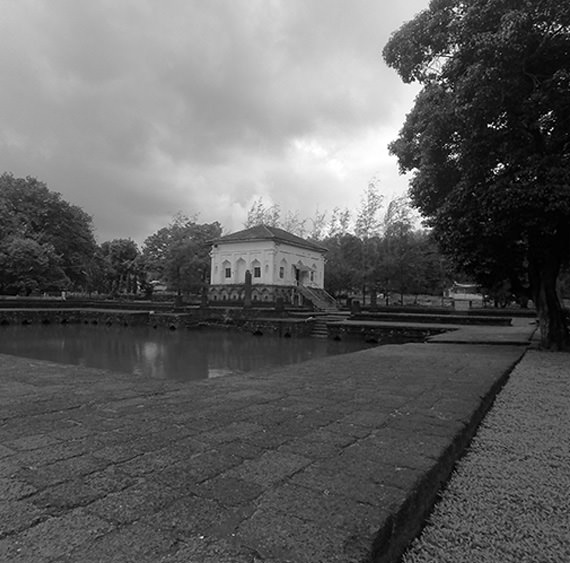
The most striking part of the Safa Masjid complex is its huge tank, with 44 hammams (hot-air baths) on its four inner sides in the typical Islamic mehrab-style arch. A flight of stairs is built in the style of Hindu bathing ghats.
The green rectangular tank mirrors the small laterite mosque facing it. Safa Masjid is a fusion of Indo-Islamic styles and remains a celebrated venue during Eid.
Stop 10 of 23
Namazgah
0.74sreverberation time
Namazgah was built by Prince Akbar to commemorate a battle that he and the Marathas, led by Sambhaji, fought against the Portuguese in 1683.
Long balconies beside the entrance resemble the balcões of Goan Portuguese homes, a parallel blend of Islamic and Portuguese architecture.
Stop 11 of 23
Chapel of St Catherine
1.37sreverberation time
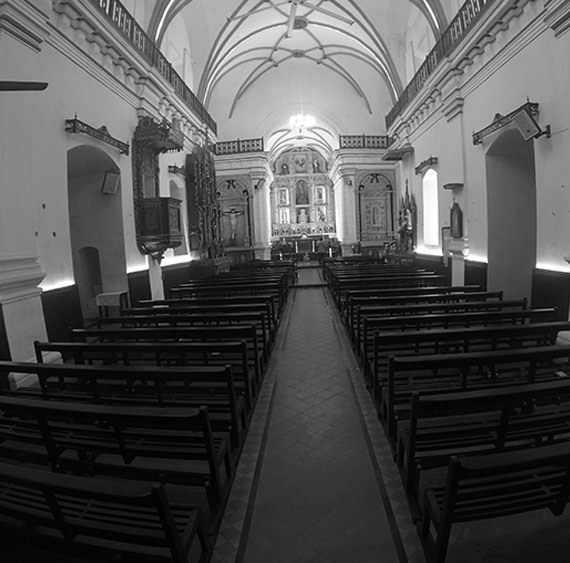
With its pale yellow exterior, the chapel is built of laterite and keeps the rectangular window panes of the old Portuguese style. Small yet elegant, it is one of the most historically significant structures in Goa.
Stop 12 of 23
Church of St Cajetan
3.44sreverberation time
The façade has a tower on either side, and two octagonal rooms with domed roofs flank the main altar. Besides the chief altar there are six more, intricately carved and gilded in Baroque style with twisted shafts and figures of angels.
Stop 13 of 23
São Jacinto church
1.83sreverberation time
The chapel existed before 1731 and was rebuilt in 1789. Also known as St Hyacinth Church, it became an independent parish in 1853. Its feast is celebrated on the last Sunday of September.
Stop 14 of 23
São Jacinto lighthouse
2.10sreverberation time
Built around 1900 on the island of São Jacinto, this lighthouse worked as the rear light of an entrance range. The round stone tower, about 12 metres high, has been abandoned and inactive for many years.
Stop 15 of 23
Pilar mission seminary
3.54sreverberation time
The monastery entrance has a door with granite columns and foliage patterns, and a granite statue of St Francis of Assisi in the niche above. The pulpit is a typical example of the Salomonic columns of the Baroque school. The original structure dates from 1663.
Stop 16 of 23
Pilar reconciliation chapel
2.46sreverberation time
Built in 1663. The main altar of the monastery church is in the Spanish Baroque style, with Ionic columns and a painting of the crucifixion above.
Stop 17 of 23
Our Lady of the Rosary
5.03sreverberation time
With windows near the roof and rounded towers, the church resembles a fortress. It has a two-storey portico of laterite and lime plaster, and a tiled roof carried on wooden rafters.
Stop 18 of 23
Basilica of Bom Jesus
3.23sreverberation time
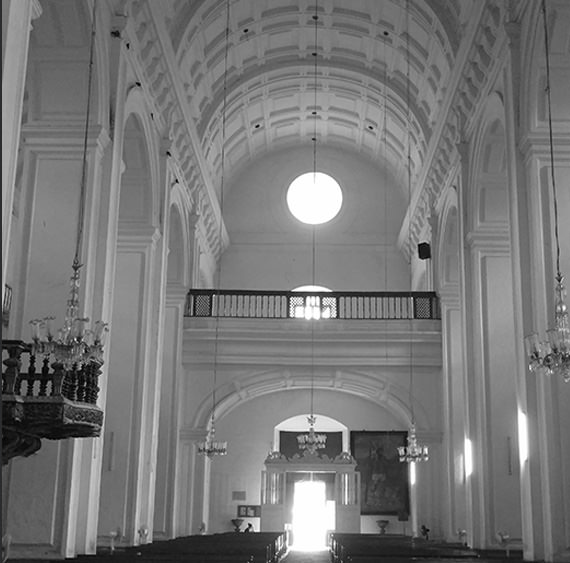
The floor is laid in marble inlaid with precious stones. The black granite façade combines Doric, Corinthian and composite styles with remarkable simplicity; the interior is Mosaic-Corinthian. Part of the building burned in 1633 and was rebuilt in 1783.
Stop 19 of 23
Sé Cathedral
4.01sreverberation time
The main altar is dedicated to Catherine of Alexandria, flanked by old paintings. On the right is the Chapel of the Cross of Miracles, where, according to local legend, a vision of Christ appeared in 1619.
The tower houses the ‘Golden Bell’, named for its rich colour. Sé is one of the largest churches in Goa.
Stop 20 of 23
Our Lady of Penha de França
2.89sreverberation time
Built in 1626 and paid for entirely by a local widow, Ana de Azavedo. Within 26 years the building had fallen into ruin; it was rebuilt in 1655 and declared a national monument in 1932.
Stop 21 of 23
Shanta Durga temple
1.23sreverberation time
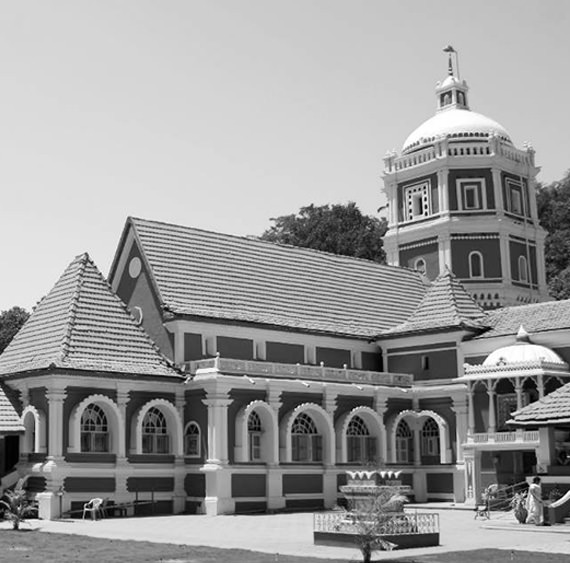
A small laterite and mud shrine first housed the deity at its new location. Its foundation stone as a temple was laid in 1730, during the reign of the Maratha ruler Shahu Raje of Satara. Built in Indo-Portuguese style, it was completed in 1738 and last renovated in 1966.
Stop 22 of 23
Corjuem fort
7.43sreverberation time
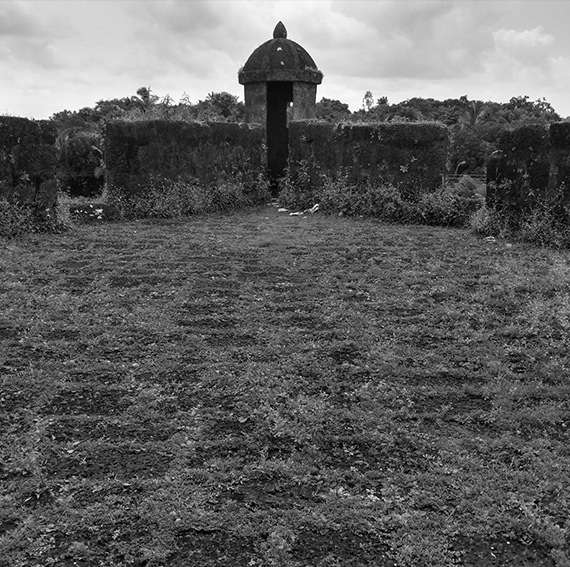
The fort was rebuilt by the Portuguese to strengthen their defence around Panjim. In the early 1800s it served as a military school with a battery of four guns. Inside are a well, living quarters for its defenders and a chapel to St Anthony, all surrounded by the Goan countryside.
Stop 23 of 23
Cabo de Rama fort
1.48sreverberation time
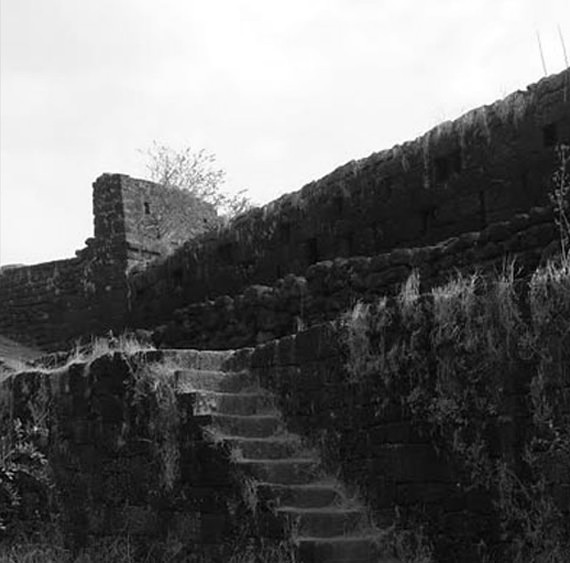
Ruins inside the fort may once have been quarters for the troops stationed here. It was used as a prison until 1955 and then abandoned. The church of Santo António inside is in excellent condition and still visited by devotees.